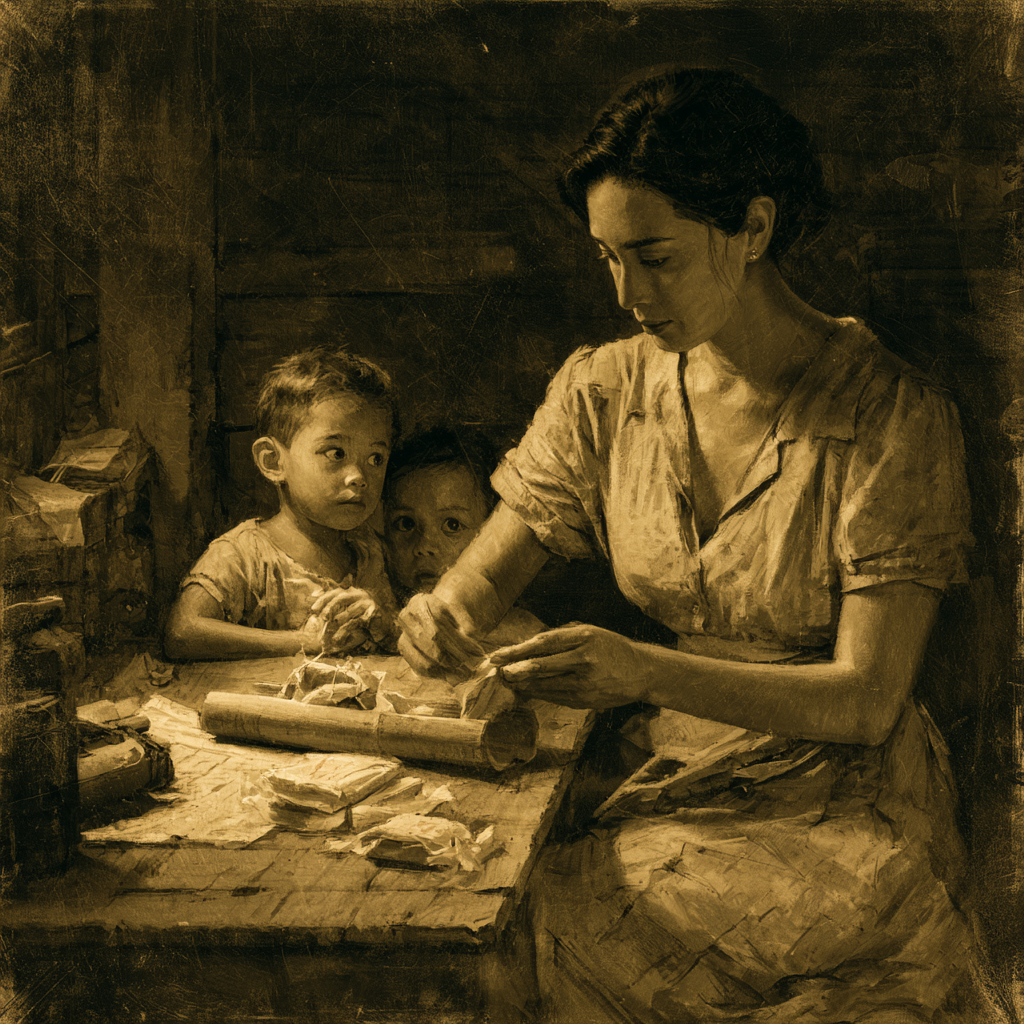
If you were to step out into a provincial barangay in Central Luzon before dawn, the sounds and smells would tell you immediately that the day’s meals are not prepared the way they are in the States. There is the rhythmic chopping of garlic, the scent of woodsmoke, and the hum of early-morning tricycles.
For an American observer, the daily routine of food preparation here can feel like stepping into a time machine. In many ways, the rhythm of sourcing and cooking meals closely mirrors how Americans lived in the early part of the 20th century, before the era of the massive supermarket haul and the cavernous, double-door refrigerator. But this isn’t merely a society lagging behind; it is a highly practical adaptation to a tropical climate, economic realities, and a deeply ingrained food culture.
The Myth of “No Kitchen” and the Logic of the “Dirty Kitchen”
A common misconception among foreigners is that many Filipinos simply do not have kitchens. The reality is more nuanced. While modern, indoor Western-style kitchens exist in middle-class and wealthy homes, the heart of Philippine culinary life usually beats outdoors in what is affectionately called the “dirty kitchen” (kalan sa labas).
The dirty kitchen is exactly what it sounds like: a secondary, open-air or well-ventilated cooking space, usually attached to the back of the house. This setup is not born out of a lack of domesticity, but out of necessity. The Philippines is hot. Cooking a heavy meal indoors—especially one that requires boiling stews for hours or frying pungent dried fish—would trap unbearable heat, smoke, and strong odors inside the primary living space. By moving the heavy cooking outside, the main house stays cool and clean.
Furthermore, many rural or working-class families still rely on charcoal or wood for cooking fuel because it is significantly cheaper than bottled LPG (propane) or electricity. You simply cannot burn wood or charcoal in an enclosed, modern indoor kitchen.
The Daily Forage vs. The Weekly Haul
In the United States, a household might do a massive grocery run once a week, storing gallons of milk, pounds of meat, and bulk vegetables in large refrigerators and chest freezers.
In the Philippines, the rhythm is daily. Electricity here is expensive—among the highest rates in Asia. Running a large refrigerator around the clock is a significant financial burden for an average family. Therefore, many homes either have a very small refrigerator used strictly for basics and cold water, or they have none at all.
Instead of relying on refrigeration, they rely on the palengke (the local wet market). The homemaker visits the market at dawn every single day to buy exactly what is needed for that day’s meals: a half-kilo of fresh pork, a bundle of water spinach, and a few tomatoes. Because the food is bought fresh in the morning and consumed by evening, long-term cold storage is unnecessary.
And yes, the historical parallel to early 20th-century America extends to the ice trade. Because commercial refrigeration is costly, the delivery of large block ice remains a vital industry. You will frequently see tricycles with sidecars loaded with heavy blocks of ice, delivering them to local neighborhood stores (sari-sari stores), open-air eateries (carinderias), and fishmongers. Even some refrigerated delivery vans rely on thick blocks of ice packed alongside the cargo to keep temperatures down while navigating traffic in the tropical heat.
The Structure of the Meals
This daily sourcing completely changes the structure of the meals themselves.
Breakfast: In the States, breakfast is often a quick, individualized affair—a bowl of cold cereal, a piece of toast, or a coffee on the go. In the Philippines, breakfast (almusal) is a major, hot meal. Because the staple is rice, breakfast usually consists of sinangag (garlic fried rice made from the previous night’s leftovers), paired with a fried egg and a protein like longganisa (sausage) or daing (dried salted fish). It is heavy, savory fuel designed to sustain a person through a long commute or physical labor.
Lunch: While Americans might grab a quick sandwich or a salad at their desk, lunch in the Philippines is traditionally the heaviest and most important meal of the day. It is a hot meal, always centered around a mountain of steamed white rice and a shared ulam (main dish), such as a sour tamarind soup (sinigang) or chicken stewed in soy sauce and vinegar (adobo).
Dinner: Dinner is often a repetition of lunch. Whatever was cooked in the midday is eaten again in the evening, ensuring that the fresh ingredients bought at the dawn market are fully consumed before they can spoil in the ambient heat.
The differences in how meals are prepared in the States versus the Philippines are stark, but they are not arbitrary. The American kitchen is built around insulation, preservation, and weekly convenience. The Philippine kitchen is built around ventilation, daily freshness, and working in harmony with the realities of a tropical environment.
Leave a Reply