Category: The Philippine Chronicle

  • The Alchemy of Scrap: Navigating the E-Waste Trade in Subic Bay

    The Alchemy of Scrap: Navigating the E-Waste Trade in Subic Bay

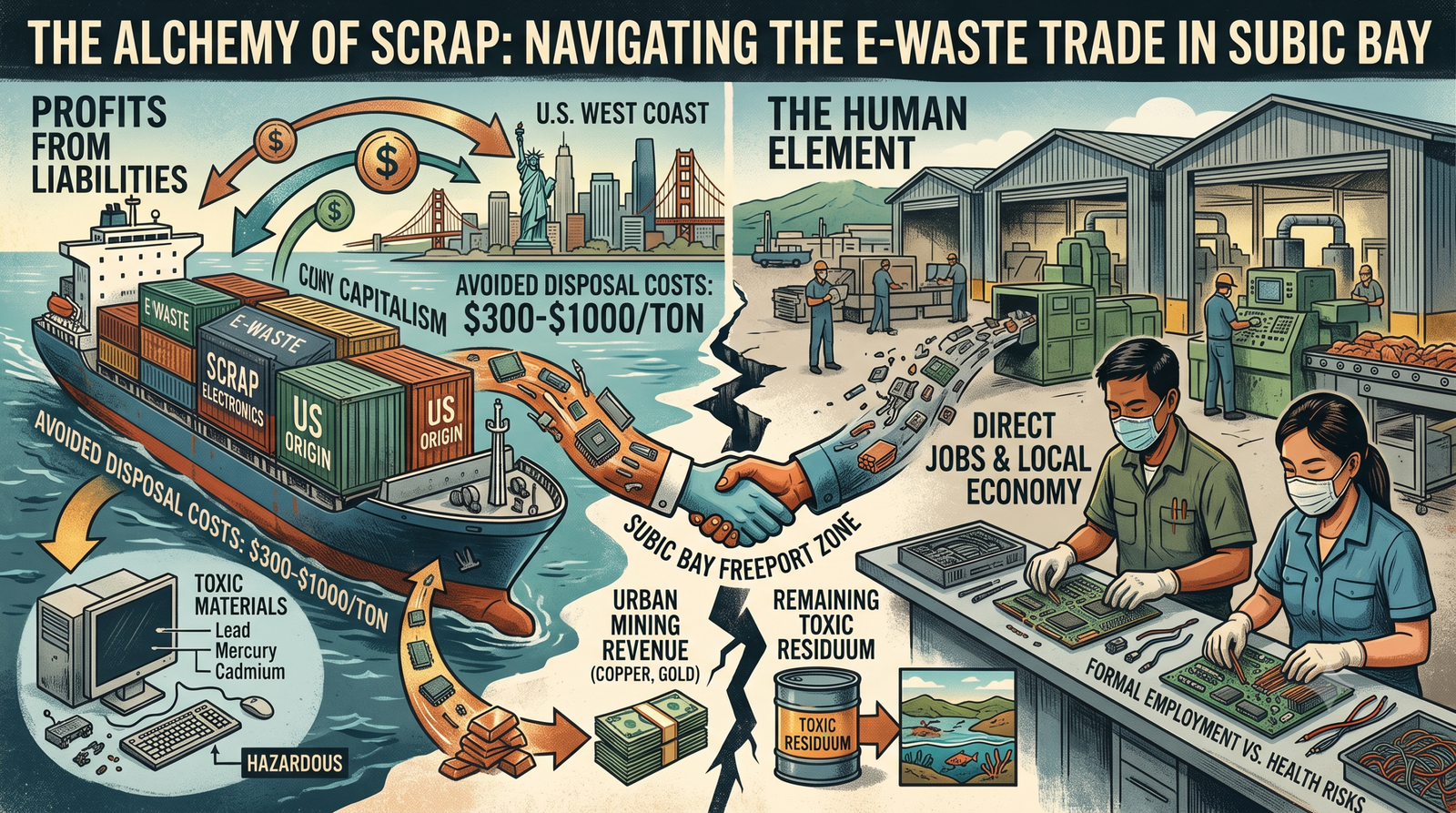
    Subic Bay has always been defined by what moves through its deepwater port. It is an economic engine for Olongapo, Zambales, and the broader Central Luzon region, bringing in jobs, infrastructure, and international trade. But over the last year, a different kind of cargo has been quietly stacking up at the container terminals: the discarded remnants of American digital life.

    Between March 2025 and June 2026, environmental watchdogs tracked 234 containers of suspected electronic waste—old servers, circuit boards, and wiring—originating from the United States and arriving at the Subic Bay Freeport.

    The situation highlights a complicated global reality. What one nation classifies as a toxic liability, another sees as a lucrative commodity. At the center of this exchange are the people living and working around the bay, caught between the immediate need for a paycheck and the long-term stewardship of their home.

    The Economics of Shifting the Burden

    To understand why a broken computer travels thousands of miles across the Pacific, you have to look at the math.

    In the United States, safely recycling hazardous e-waste under strict environmental regulations is expensive, costing anywhere from $300 to over $1,000 per ton. For a waste generator, that is a heavy liability on the balance sheet.

    However, if that same waste is boxed up and exported to a scrap broker overseas, the liability suddenly becomes a profit. Exporters can sell unsorted e-waste for $50 to $200 a ton. They clear their warehouses, make a modest return, and pass the environmental burden downstream.

    The United States is one of the few industrialized nations that has not ratified the Basel Convention, an international treaty designed to stop developed countries from dumping hazardous waste into developing ones. Because the U.S. is not bound by the treaty, the export of these materials exists in a regulatory gray area, exploiting legal loopholes to reach shores like ours.

    “Urban Mining” vs. Toxic Dumping

    Inside the Subic Bay Freeport, local recycling locators have defended the imports as a vital part of the circular economy. They call it “urban mining.”

    And in a strictly economic sense, they aren’t wrong. A single ton of high-grade electronic circuit boards yields significantly more gold and copper than a ton of raw mined ore. Operating with tax exemptions inside the Freeport, and utilizing a local labor force that is far less expensive than automated American plants, these facilities manually dismantle the scrap. The valuable metals are extracted and sold to global smelters, generating revenue and creating formal employment for residents of Olongapo and nearby towns.

    For the man on the street—a father trying to put rice on the table or pay for his children’s schooling—a job at a sorting facility is a lifeline. It provides a steady income in a region where formal employment can sometimes be scarce.

    But this economic opportunity comes with a quiet, lingering cost. Electronic waste is laced with lead, mercury, cadmium, and flame retardants. While the valuable gold and copper are exported back out, the toxic, non-recyclable residuals—chemical sludges and contaminated plastics—remain behind. If a facility cuts corners on safety protocols or ventilation, the workers bear the physical cost through respiratory issues and heavy metal exposure. Furthermore, the risk of chemical runoff poses a direct threat to the marine ecology of Subic Bay, which local communities rely on for both fishing and tourism.

    Jam Lorenzo, deputy executive director of BAN Toxics, summarized the fundamental tension during recent protests: “The unimpeded entry of e-waste into Subic infringes upon our country’s regulatory authority over our territory. Such activities run contrary to the state policy of safeguarding the sovereignty, territorial integrity, and environmental protection embodied in our Constitution.”

    A Line in the Sand

    The tension between these two realities recently came to a head.

    On July 22, 2026, the Bureau of Customs (BOC) at the Port of Subic took decisive action. Acting on intelligence regarding the MV Tokyo Express, authorities flagged three incoming containers declared as “scrap copper” from the U.S. Instead of allowing them to be offloaded, the BOC issued a “Retain on Board” order, citing the Philippines’ obligations under the Basel Convention. The ship departed a day later, taking the cargo with it.

    Following this incident, the Subic Bay Metropolitan Authority (SBMA) clarified its stance. Armie Llamas, head of the SBMA Communications Department, stated, “The SBMA, in collaboration with the Bureau of Customs Port of Subic Bay, has denied the entry of suspected e-waste shipments originating from the US, a country that is not a party to the Basel Convention.” She added that as a signatory, the Philippines, through the SBMA, is committed to upholding the treaty’s provisions.

    It was a significant victory for local environmental groups, including the EcoWaste Coalition and BAN Toxics, who have been sounding the alarm for months. Yet, the watchdogs have already flagged an additional 184 containers of suspected e-waste currently in transit, expected to arrive between August and September.

    The inter-agency meetings now taking place between the BOC, the SBMA, and the Department of Environment and Natural Resources (DENR) will determine the future of this trade in our region.

    Weighing the True Cost

    The business of imported e-waste asks a fundamental question about how we value our resources and our people. There is undeniable ingenuity in recovering precious metals from discarded technology, and the jobs provided by these facilities matter deeply to the families who rely on them.

    However, a truly fair economy does not require a community to trade its long-term health and the safety of its environment for short-term wages. Real prosperity involves honest accounting. As long as it remains cheaper for developed nations to ship their hazardous liabilities overseas rather than process them responsibly at home, the pressure on ports like Subic Bay will continue.

    Finding a balanced path forward means ensuring that the pursuit of profit does not leave the heaviest burdens on the shoulders of those least equipped to carry them.

    Editor’s Note: This article was prepared and structured with the assistance of artificial intelligence. All facts, quotes, and regional details have been directed, reviewed, and verified by the author to ensure accuracy, fairness, and alignment with verifiable events.

  • The Working-Class Jeepney: From Scrap to Symbol

    The Working-Class Jeepney: From Scrap to Symbol

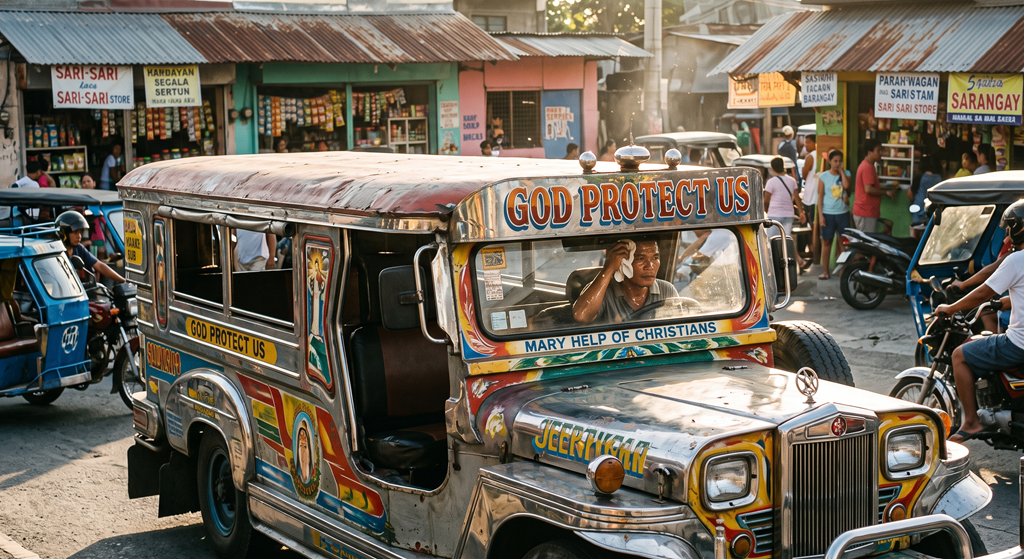
    In the wake of World War II, the streets of Manila were left in ruins, and the public transportation system was practically nonexistent. When American forces departed, they left behind hundreds of surplus Willys military jeeps. Where others saw abandoned weapons of war, Filipinos saw an opportunity for reinvention.

    Through sheer ingenuity and the quintessential Filipino spirit of diskarte (resourcefulness), these drab olive vehicles were stripped down, elongated, given galvanized iron roofs, and splashed with vibrant, kaleidoscopic colors. The modern jeepney was born, quickly earning its title as the undeniable “King of the Road.”

    Colors with a Purpose: The Olongapo Innovation

    While the wild, personalized art of the Manila jeepney is famous worldwide, the use of color took on a highly functional, disciplined role north of the capital. The system of color-coding jeepneys to identify specific passenger routes was actually pioneered in Olongapo City.

    To bring order to the often chaotic nature of informal transit, Olongapo’s local government instituted a strict routing scheme. Jeepneys were painted in solid, uniform colors corresponding to their distinct zones—Yellow for the Sta. Rita route, Red for Gordon Heights, Brown for Cabalan, and Blue for Subic town. This ingenious, locally born system made the transit network instantly navigable for everyday workers and residents, proving that traditional jeepneys could be efficiently organized to serve a growing city.

    The Engine of the Working Class

    For decades, the jeepney hasn’t just moved the masses; it has fed the families of those behind the wheel. However, the economic reality of driving a jeepney is a daily, grueling hustle governed by the boundary system.

    • The Daily Grind: Drivers typically do not own their vehicles. Instead, they pay a fixed daily fee—the “boundary”—to the jeepney operator before they can claim any profit.

    • High-Stakes Hustle: A driver’s take-home pay is strictly what remains after the boundary and the day’s fluctuating diesel costs are paid. On a bad day with heavy traffic or low passenger turnout, a driver might work 12 to 14 hours in the sweltering heat and bring home barely enough to put a meal on the table.

    Despite the hardship, the inside of a jeepney remains a unique microcosm of Filipino society. There is a deep, unwritten system of communal trust: passengers pass coins down the line shoulder-to-shoulder with the respectful phrase “Bayad po” (Here is my fare), and a simple tap of a coin on the metal roof signals the driver to pull over.

    Progress vs. Heritage: The Modernization Threat

    Today, the iconic Philippine jeepney is at a critical crossroads. The government’s ongoing Public Utility Vehicle Modernization Program (PUVMP) aims to phase out traditional jeepneys—many of which run on decades-old, highly polluting diesel engines—in favor of imported, Euro-4 compliant, or electric minibuses.

    While the environmental and safety goals of greener transit are rooted in fact and necessity, the execution threatens the very working class the jeepney has always supported.

    • The Financial Chasm: A traditional jeepney is relatively cheap to maintain, but the new modernized units cost upwards of 2.5 to 3 million Philippine pesos.

    • The Debt Trap: For an average driver earning a marginal daily wage, taking on a multi-million peso loan is mathematically devastating. The requirement to join consolidated cooperatives has left many drivers fearing the loss of their autonomy, their routes, and ultimately, their livelihoods.

    The Road Ahead

    The jeepney is more than just a colorful, mechanical relic; it is a rolling monument to Filipino resilience and working-class grit. As the country wrestles with the necessary but painful steps toward modernization, the plight of the jeepney driver serves as a stark reminder: true progress must ensure that the very people who kept the nation moving for over seventy years are not simply left by the side of the road.

    WP_Chronicles_Jeepney

  • The Real Cost of Calories

    The Real Cost of Calories

    Ministry News & Updates:

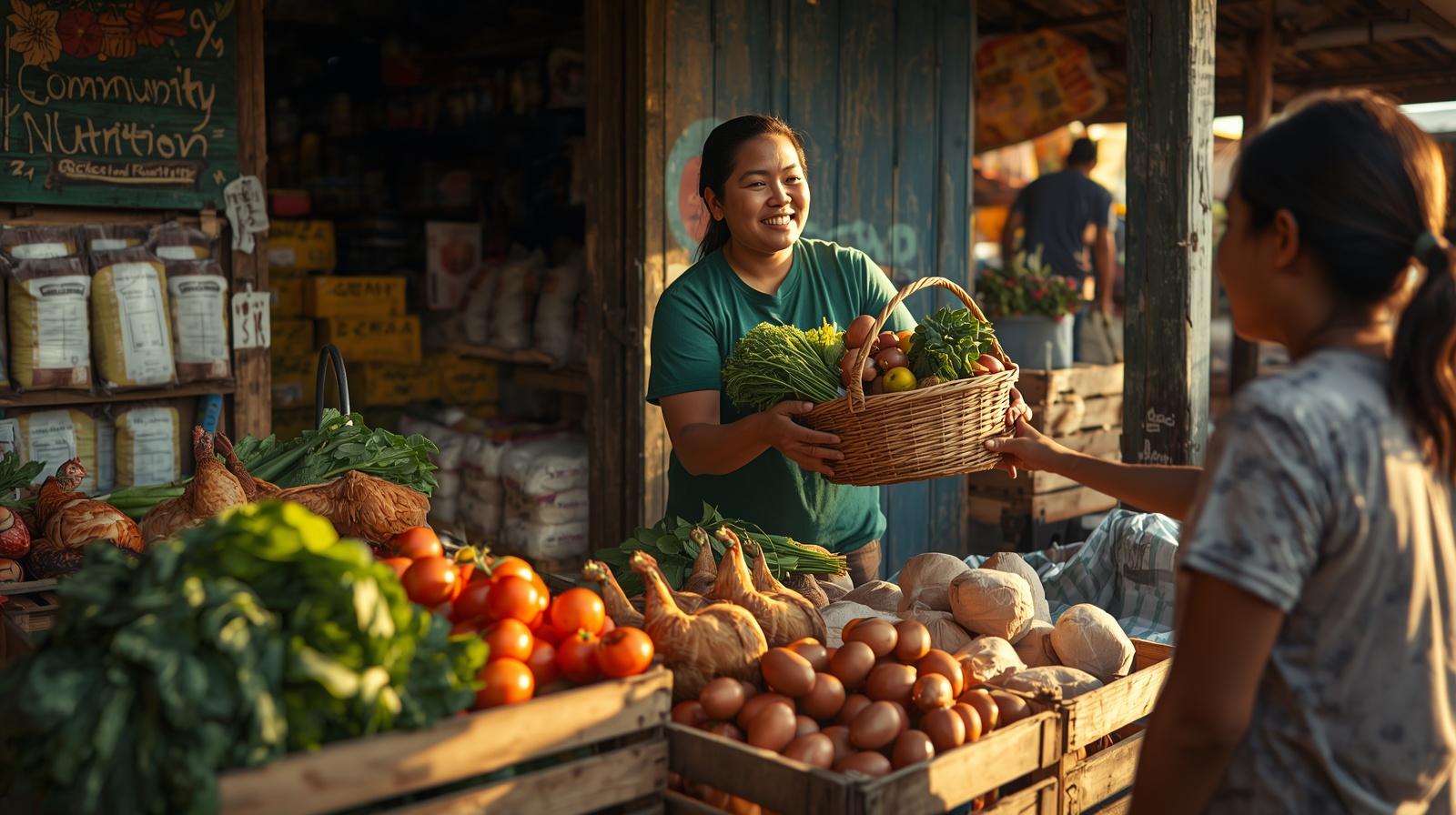
    Greetings from Olongapo City! As we continue our daily outreach, we want to share a glimpse into the economic realities our neighbors face every day. When we talk about hunger in our communities, the crisis isn’t always an absolute lack of food; it is the prohibitive cost of nutritious food.

    To understand the daily reality for millions of families here, we have to look at the math.

    The Mathematics of a Daily Diet

    Here in Central Luzon, the minimum wage hovers around ₱500 per day. For a family of five relying on a single minimum-wage earner, the daily budget is stretched incredibly thin after paying for rent, utilities, and transportation.

    To maintain basic energy levels, a family of five needs roughly 10,000 calories a day combined. Here is a look at how the cost of basic local food items translates into that daily energy:

    • White Rice: ₱50 – ₱55 per kg (High carbohydrate energy, but extremely low in micronutrients).
    • Instant Noodles: ₱15 – ₱20 per pack (High sodium and empty calories).
    • Eggs: ₱8 – ₱10 per piece (Excellent source of accessible protein).
    • Whole Chicken: ₱200 – ₱220 per kg (High-quality protein).
    • Leafy Greens: ₱40 – ₱60 per bundle (Vital for iron and vitamins).

    The “Empty Calorie” Trap

    Looking at those prices, the survival strategy for many families becomes clear. A family can physically fill their stomachs and meet their basic caloric needs for around ₱150 to ₱200 a day by relying almost entirely on bulk white rice and processed foods like instant noodles.

    However, the Food and Agriculture Organization (FAO) estimates that a genuinely healthy, balanced diet—one that includes sufficient daily protein and fresh produce—costs roughly ₱250 to ₱290 per person, per day.

    For a family of five, that equals roughly ₱1,250 to ₱1,450 daily—nearly three times the regional minimum wage.

    The Impact on the Next Generation

    This massive gap between the cost of survival calories and nutritious calories leads directly to severe health challenges. Because protein is often priced out of reach, roughly 26% of Filipino children under five suffer from stunting, which limits long-term cognitive development and immune system strength. Furthermore, relying on rice and instant noodles leaves individuals severely deficient in vital nutrients like iron and Vitamin A.

    Bridging the Gap Together

    Understanding these numbers changes how we approach our ministry. When we organize feeding outreaches or distribute grocery packs, our focus cannot just be on handing out bulk rice.

    Because of your continued partnership, we are able to bridge the nutritional gap that families simply cannot afford to fill on their own. Your support provides access to the proteins, fresh produce, and fortified goods that change a child’s developmental trajectory.

    True community development isn’t just about keeping people from starving; it is about ensuring they have the physical foundation they need to live healthy, capable, and dignified lives. Thank you for standing with us and for investing in the health and future of this community!

  • Daily Bread vs. Daily Rice: The Practical Rhythms of the Philippine Kitchen

    Daily Bread vs. Daily Rice: The Practical Rhythms of the Philippine Kitchen

    If you were to step out into a provincial barangay in Central Luzon before dawn, the sounds and smells would tell you immediately that the day’s meals are not prepared the way they are in the States. There is the rhythmic chopping of garlic, the scent of woodsmoke, and the hum of early-morning tricycles.

    For an American observer, the daily routine of food preparation here can feel like stepping into a time machine. In many ways, the rhythm of sourcing and cooking meals closely mirrors how Americans lived in the early part of the 20th century, before the era of the massive supermarket haul and the cavernous, double-door refrigerator. But this isn’t merely a society lagging behind; it is a highly practical adaptation to a tropical climate, economic realities, and a deeply ingrained food culture.

    The Myth of “No Kitchen” and the Logic of the “Dirty Kitchen”

    A common misconception among foreigners is that many Filipinos simply do not have kitchens. The reality is more nuanced. While modern, indoor Western-style kitchens exist in middle-class and wealthy homes, the heart of Philippine culinary life usually beats outdoors in what is affectionately called the “dirty kitchen” (kalan sa labas).

    The dirty kitchen is exactly what it sounds like: a secondary, open-air or well-ventilated cooking space, usually attached to the back of the house. This setup is not born out of a lack of domesticity, but out of necessity. The Philippines is hot. Cooking a heavy meal indoors—especially one that requires boiling stews for hours or frying pungent dried fish—would trap unbearable heat, smoke, and strong odors inside the primary living space. By moving the heavy cooking outside, the main house stays cool and clean.

    Furthermore, many rural or working-class families still rely on charcoal or wood for cooking fuel because it is significantly cheaper than bottled LPG (propane) or electricity. You simply cannot burn wood or charcoal in an enclosed, modern indoor kitchen.

    The Daily Forage vs. The Weekly Haul

    In the United States, a household might do a massive grocery run once a week, storing gallons of milk, pounds of meat, and bulk vegetables in large refrigerators and chest freezers.

    In the Philippines, the rhythm is daily. Electricity here is expensive—among the highest rates in Asia. Running a large refrigerator around the clock is a significant financial burden for an average family. Therefore, many homes either have a very small refrigerator used strictly for basics and cold water, or they have none at all.

    Instead of relying on refrigeration, they rely on the palengke (the local wet market). The homemaker visits the market at dawn every single day to buy exactly what is needed for that day’s meals: a half-kilo of fresh pork, a bundle of water spinach, and a few tomatoes. Because the food is bought fresh in the morning and consumed by evening, long-term cold storage is unnecessary.

    And yes, the historical parallel to early 20th-century America extends to the ice trade. Because commercial refrigeration is costly, the delivery of large block ice remains a vital industry. You will frequently see tricycles with sidecars loaded with heavy blocks of ice, delivering them to local neighborhood stores (sari-sari stores), open-air eateries (carinderias), and fishmongers. Even some refrigerated delivery vans rely on thick blocks of ice packed alongside the cargo to keep temperatures down while navigating traffic in the tropical heat.

    The Structure of the Meals

    This daily sourcing completely changes the structure of the meals themselves.

    Breakfast: In the States, breakfast is often a quick, individualized affair—a bowl of cold cereal, a piece of toast, or a coffee on the go. In the Philippines, breakfast (almusal) is a major, hot meal. Because the staple is rice, breakfast usually consists of sinangag (garlic fried rice made from the previous night’s leftovers), paired with a fried egg and a protein like longganisa (sausage) or daing (dried salted fish). It is heavy, savory fuel designed to sustain a person through a long commute or physical labor.

    Lunch: While Americans might grab a quick sandwich or a salad at their desk, lunch in the Philippines is traditionally the heaviest and most important meal of the day. It is a hot meal, always centered around a mountain of steamed white rice and a shared ulam (main dish), such as a sour tamarind soup (sinigang) or chicken stewed in soy sauce and vinegar (adobo).

    Dinner: Dinner is often a repetition of lunch. Whatever was cooked in the midday is eaten again in the evening, ensuring that the fresh ingredients bought at the dawn market are fully consumed before they can spoil in the ambient heat.

    The differences in how meals are prepared in the States versus the Philippines are stark, but they are not arbitrary. The American kitchen is built around insulation, preservation, and weekly convenience. The Philippine kitchen is built around ventilation, daily freshness, and working in harmony with the realities of a tropical environment.

  • The Sweet Necessity: The Ingenuity Behind Banana Ketchup

    The Sweet Necessity: The Ingenuity Behind Banana Ketchup

    Walk into any Filipino kitchen, and you will inevitably find a bright red bottle sitting on the table. To the uninitiated visitor from the United States, it looks like standard tomato ketchup. But one taste—a unique balance of sweet, tangy, and savory—reveals that this is something entirely different. This is banana ketchup.

    While it is now a beloved staple of Filipino cuisine, the story of this condiment is not a lighthearted one. It is a story of scientific brilliance and quiet heroism born during the dark years of World War II.

    A Genius in the Lab

    The invention of banana ketchup is the legacy of María Orosa, a brilliant food chemist born in Taal, Batangas, in 1892. After earning degrees in pharmaceutical and food chemistry at the University of Washington in the United States, Orosa was offered a prestigious, lucrative position as an assistant chemist with the Washington state government.

    In an era of systemic prejudice against women and immigrants, her success was remarkable. Yet, she chose to walk away from that comfort. Believing her knowledge belonged to her home, she returned to the Philippines to lead the plant utilization division at the Bureau of Plant Industry.

    Invention Out of Need

    In the 1920s and 30s, the Philippines relied heavily on imported canned goods, even though the islands were rich with agricultural resources. Orosa set out to change this, developing over 700 recipes and preservation methods to promote self-reliance.

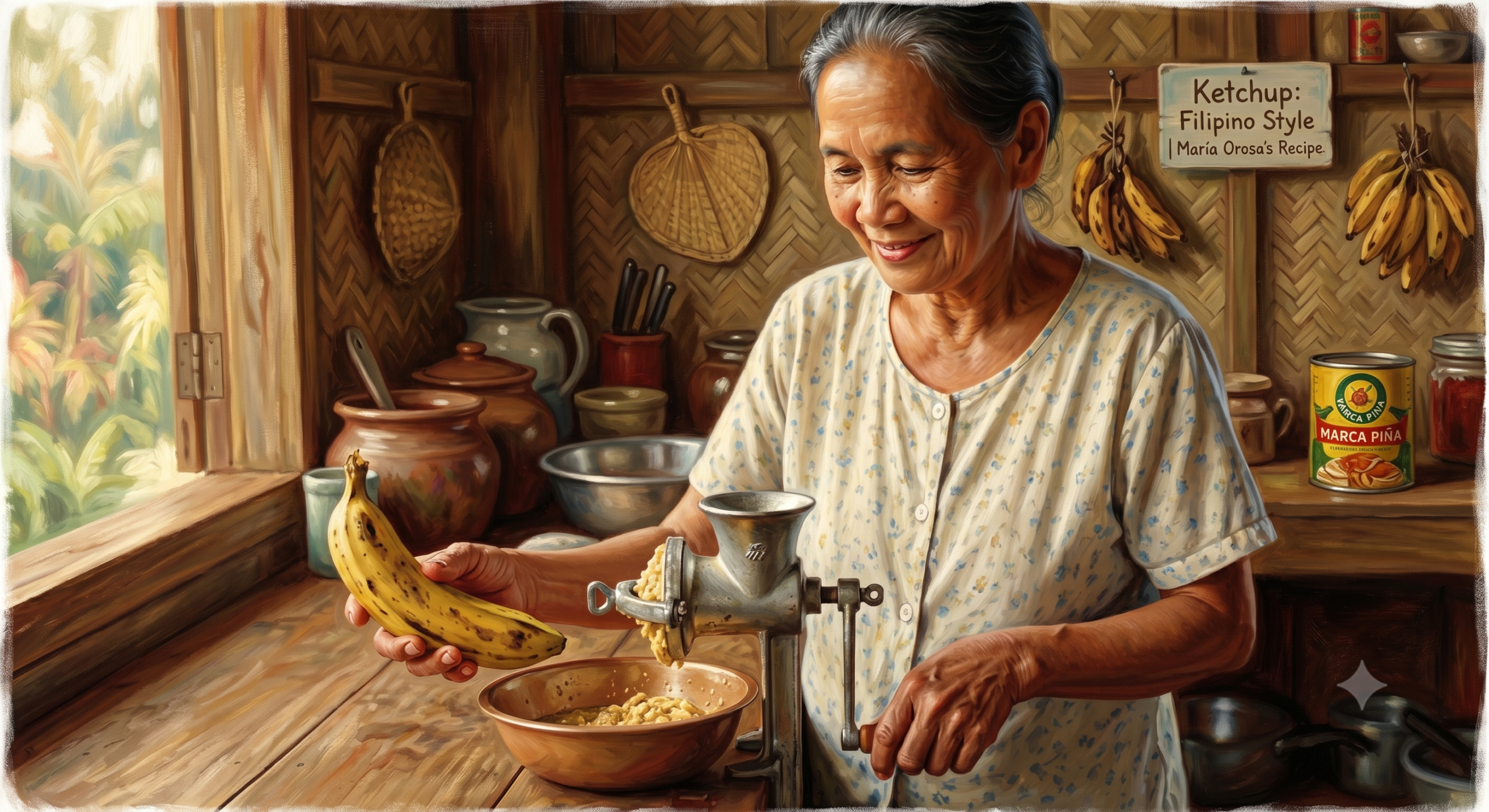
    The creation of banana ketchup was born of this desire to utilize local ingredients. With tomatoes scarce and expensive, Orosa experimented with the abundant banana crops. She created a sauce that was not only shelf-stable but also suited the Filipino palate, which inherently favors sweeter profiles.

    A Weapon of Resistance

    When the Japanese invaded the Philippines in 1941, Orosa’s scientific work took on a life-saving urgency. She joined Marking’s Guerrillas, a local resistance group, holding the rank of captain.

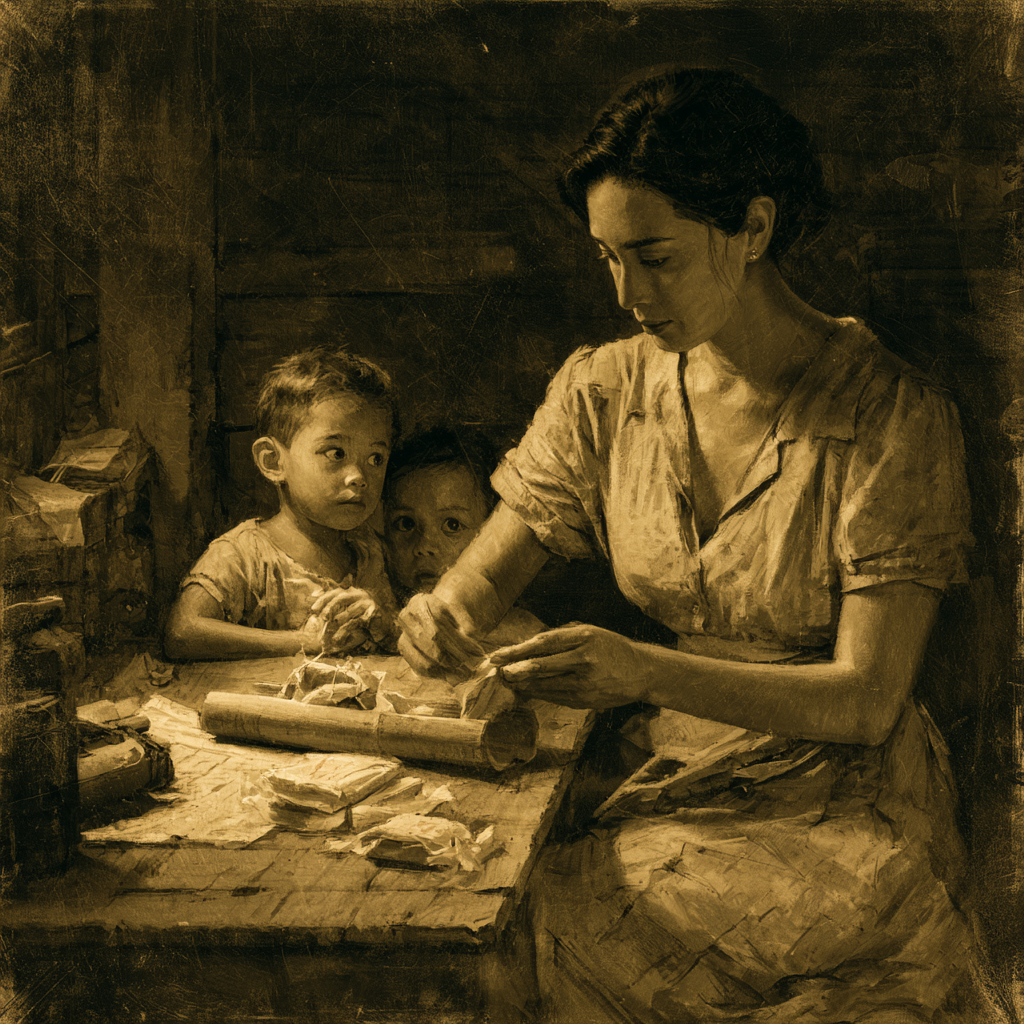
    While others fought with rifles, Orosa fought with science. Working under the radar, she organized a system to smuggle her nutrient-rich inventions—such as Darak (vitamin-rich cookies made from rice bran) and Soyalac (a protein-rich soybean preparation)—into internment camps at the University of Santo Tomas. Hidden inside hollowed-out bamboo tubes, these “miracle foods” kept thousands of prisoners of war and civilians from dying of starvation and beriberi.

    Tragically, Orosa was killed by shrapnel during the Battle of Manila in February 1945. She did not seek the spotlight, but her work—including the humble banana ketchup—remains a lasting testament to her practical, quiet dedication to her people.

    More Than a Condiment

    Today, banana ketchup is a flavor identity. It is an essential partner to fried chicken, the secret behind the unique sweetness of Filipino-style spaghetti, and a common dipping sauce for everything from omelets to hotdogs. It stands as a reminder that the most ordinary things in our lives often hold the most extraordinary histories.

    What’s Next?

    We have only just begun to scratch the surface of the Filipino table. In future articles, we will explore:

    • The Sacadas of Sugarlandia: A look at the migrant workers of Negros and the grueling history behind the sugar that sweetens our daily lives.
    • The Working-Class Jeepney: How a generation of Filipinos turned abandoned WWII military jeeps into the backbone of the nation’s public transport.
    • The Fisherfolk of Manila Bay: A profile on the families who have relied on the bay for generations and their resilience in the face of changing tides.

  • The Salt of the Earth: The Enduring Story of Pandesal

    The Salt of the Earth: The Enduring Story of Pandesal

    Long before the sun rises over the archipelago, the rhythmic thud of dough hitting wooden tables and the warm, yeasty scent of baking bread signal the start of the Filipino day. At the heart of this morning ritual is pandesal.

    More than just a staple food, pandesal is a profound reflection of Philippine history. It is a story of colonization, adaptation, and the daily economic realities of the Filipino working class.

    The Spanish Blueprint

    The story of pandesal begins in the 16th century with the arrival of the Spanish. Wheat is not native to the tropical climate of the Philippines, but Spanish colonizers, deeply reliant on bread for their own daily diet and religious sacraments, began importing wheat flour.

    The original bread baked in the islands was called pan de sal, literally translating to “bread of salt.” However, the earliest iterations of this bread were vastly different from what we know today. Modeled after the French baguette or the Spanish pan de suelo (floor bread, baked directly on the floor of a wood-fired oven), the original pandesal was hard, crusty, and distinctly savory. It was a bread born of colonial necessity, baked with inferior, imported flour that often yielded a dense, tough crust.

    The Sweet Transformation

    The pandesal we recognize today—soft, sweet, and coated in fine breadcrumbs—is actually a product of the American colonial period in the early 20th century.

    When the United States took control of the Philippines, they introduced cheaper, lower-protein American wheat to the market. They also brought commercial baking yeast and the use of baking pans. This fundamentally changed the chemistry of the neighborhood panaderia (bakery).

    To mask the slightly sour taste of the commercial yeast and to appeal to the Filipino palate, which inherently favors sweeter profiles, bakers began adding more sugar to the dough. The lower-protein flour resulted in a much softer, fluffier texture. To prevent the dough from sticking to the newly introduced metal baking pans, bakers rolled the portions in fine breadcrumbs before baking.

    In a twist of historical irony, pan de sal lost most of its saltiness, yet kept its name.

    The Barometer of the Masses

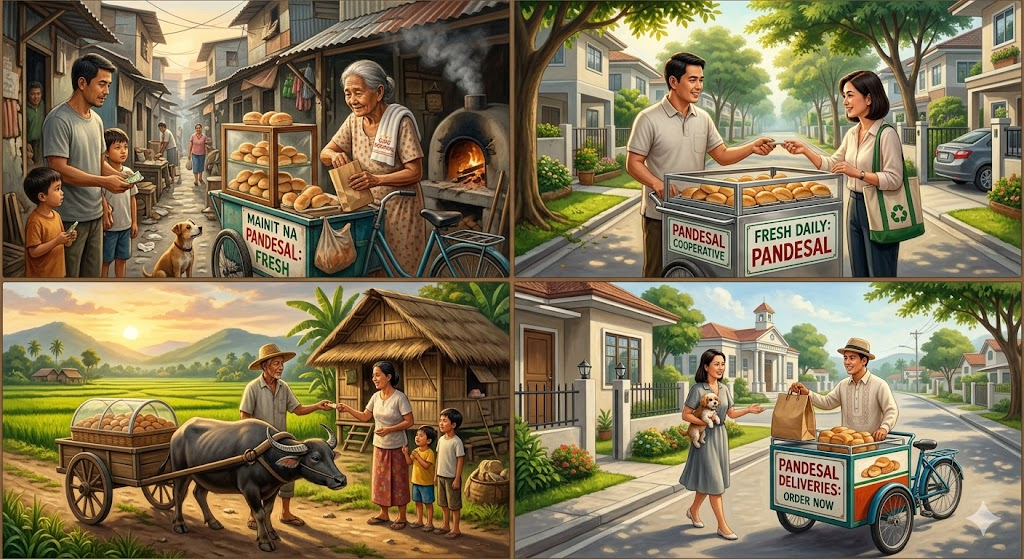
    Today, pandesal is the great equalizer, found on the breakfast tables of the wealthy and the indigent alike. But its true significance lies in its role as a lifeline for the working class.

    For generations of laborers, farmers, and urban poor, a brown paper bag of hot pandesal paired with a simple cup of instant coffee (or dipped directly into the mug) constitutes an entire, affordable breakfast. It is a source of immediate, cheap energy required for grueling manual labor.

    Because it is so deeply tied to the daily survival of the poor, pandesal also serves as an unofficial economic barometer for the nation. When global wheat prices surge, or the cost of sugar and fuel skyrockets, local bakers are faced with an impossible choice: raise the price and alienate their poorest neighbors, or keep the price the same and shrink the dough.

    This has led to the phenomenon of “shrinkflation” at the neighborhood level. Over the decades, the standard pandesal has quietly shrunk in size, a physical manifestation of inflation and the relentless economic pressure placed on the working class.

    Resilience in a Paper Bag

    Despite economic hardships, the neighborhood panaderia remains a vital community hub, and the bread itself remains a symbol of profound adaptability. The Filipino people took a colonial import, softened it, sweetened it, and made it entirely their own. Pandesal is not just the bread of the Philippines; it is the resilient, daily fuel of its people.

  • Strength in the Shadows: The Filipina Experience During World War II

    The history of the Philippines during the Second World War is often recounted through the movements of armies, the strategies of generals, and the tragic falls of Bataan and Corregidor. Yet, running parallel to the military campaigns is a narrative just as vital, though often less documented: the experience of Filipina women during the Japanese occupation from 1941 to 1945.

    Their wartime reality was not defined by the glamorous or romanticized narratives often found in fiction. It was defined by grueling endurance, quiet sacrifice, and profound courage.


    The Frontlines of the Home

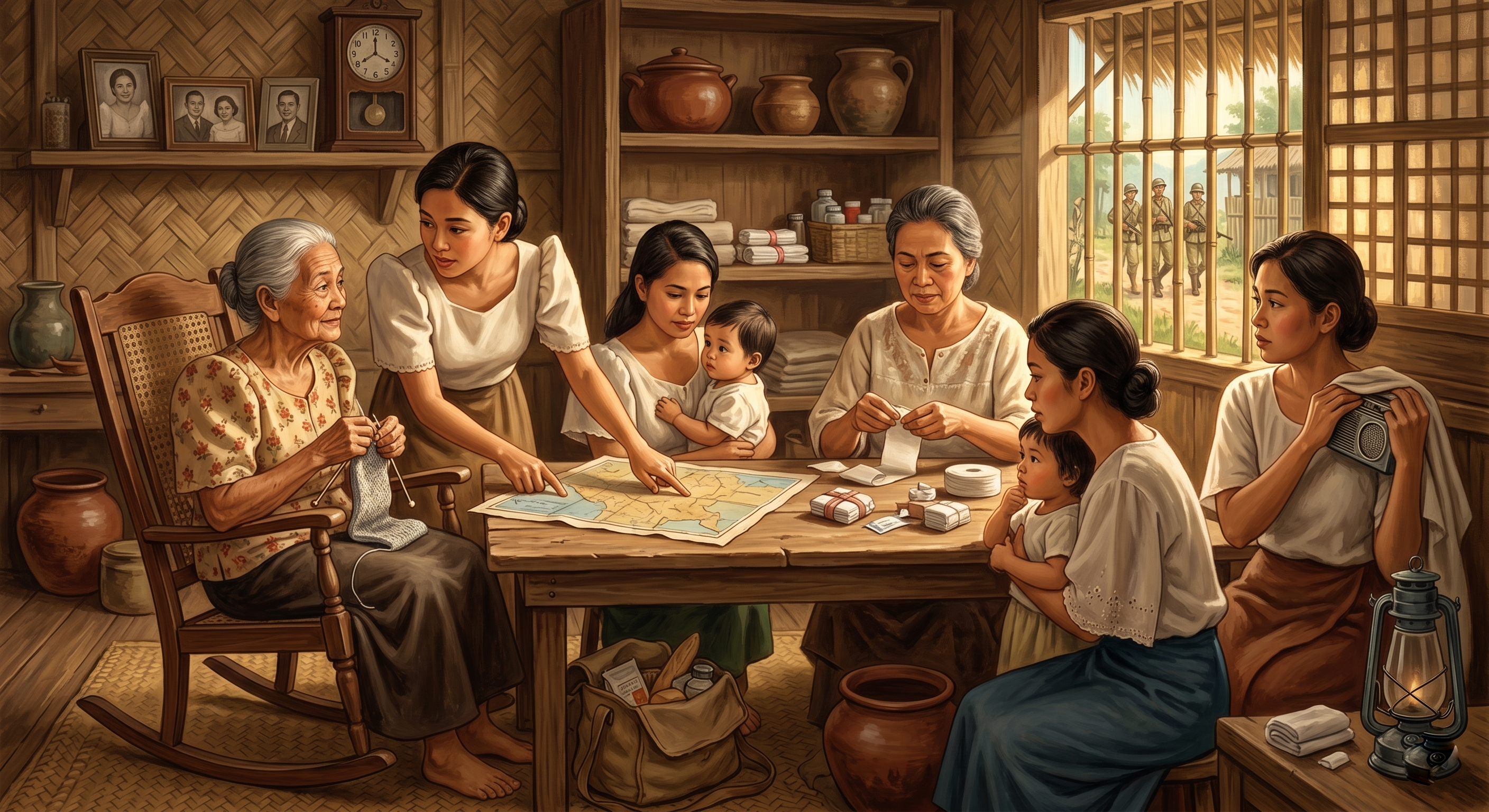
    When the Imperial Japanese Army occupied the archipelago, the daily lives of Filipinas changed overnight. With many men conscripted, killed, or fleeing to the mountains to join the guerrilla resistance, women were left to manage the survival of their households under hostile conditions.

    • Economic Survival: Hyperinflation caused by the occupation currency (often derisively called “Mickey Mouse money”) made purchasing basic necessities nearly impossible. Women turned to bartering, foraging, and black-market trading to secure rice and medicine for their families.
    • The Anchor of Faith: During a time of immense uncertainty and fear, faith became a crucial mechanism for survival. Across various Christian traditions and local communities, churches and neighborhood prayer gatherings served as hubs of mutual support, offering both spiritual solace and a quiet space to share critical information.

    The Resistance: Spies, Smugglers, and Soldiers

    Filipinas were not merely passive observers of the war; many actively worked to undermine the occupation. They leveraged the fact that occupying forces often underestimated women, using this blind spot to their advantage.

    • Josefa Llanes Escoda: A prominent social worker and founder of the Girl Scouts of the Philippines, Escoda and her husband systematically smuggled food, clothing, and vital medicines to Filipino and American prisoners of war enduring the horrors of the Bataan Death March and the concentration camps at Capas. Her network saved countless lives before she was eventually discovered, imprisoned, and executed by Japanese forces in 1945.
    • Magdalena Leones: Operating in Northern Luzon, Leones served as a special agent and intelligence officer. She memorized the names of enemy ships, their contents, and the identities of Japanese commanders, relaying this information to guerrilla forces. She personally smuggled radio parts and explosives through heavily guarded checkpoints. For her verifiable, life-saving intelligence work, she became the only Filipina to be awarded the United States Silver Star during WWII.
    • Medical Workers: Nurses and civilian doctors routinely risked their lives treating wounded guerrilla fighters in secret, fully aware that aiding the resistance carried a penalty of death.

    The Unspoken Trauma: The Malaya Lolas

    Any factual recounting of this era must compassionately acknowledge the deep wounds inflicted upon Filipina women.

    As the war progressed, the Japanese military systematically institutionalized sexual slavery. An estimated 1,000 Filipina women and girls were abducted, confined in garrison houses, and forced into servitude as “comfort women.”

    The trauma endured by these women—who later organized under the name Malaya Lolas (Free Grandmothers)—was both physical and psychological. For decades after the war, a profound cultural stigma forced many to carry their pain in silence. It was only in the 1990s that survivors began stepping forward to publicly demand official apologies and historical recognition. Their struggle for justice has been a long, sobering reminder of the enduring scars of war.


    A Legacy of Endurance

    The liberation of the Philippines in 1945 brought an end to the occupation, but the rebuilding of the nation rested heavily on the shoulders of its women. They buried the dead, rebuilt broken communities, and worked to heal families fractured by years of violence.

    Looking back at the Filipina experience during World War II requires us to strip away sentimentality and face the stark truths of the era. Their legacy is not a neat, comforting story. It is a testament to the raw, unyielding human capacity to endure deep suffering, hold fast to faith and conviction, and do what is necessary to protect the lives of others.

  • Taho: A Taste of Filipino Life, Tradition, and Community

    Taho: A Taste of Filipino Life, Tradition, and Community

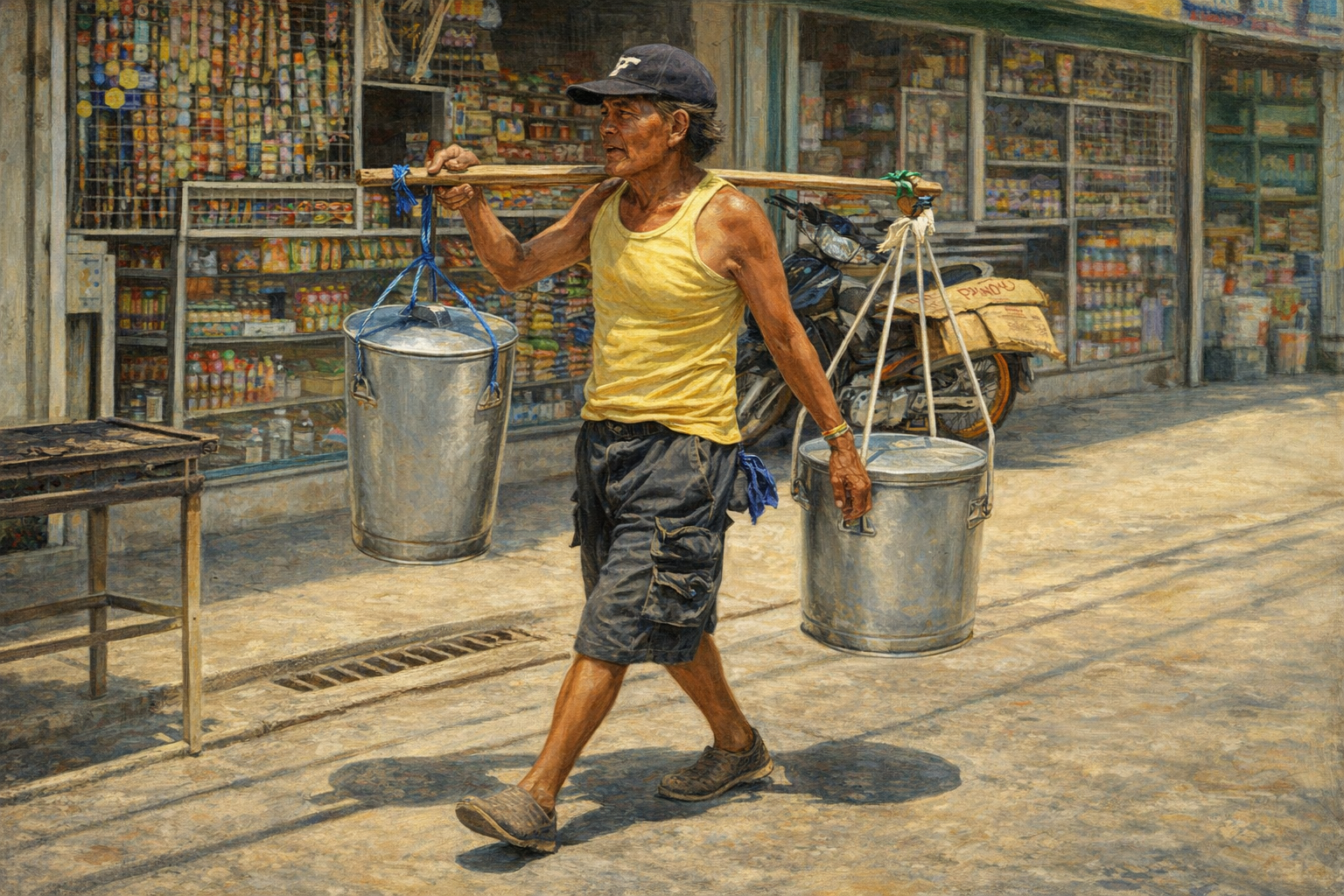
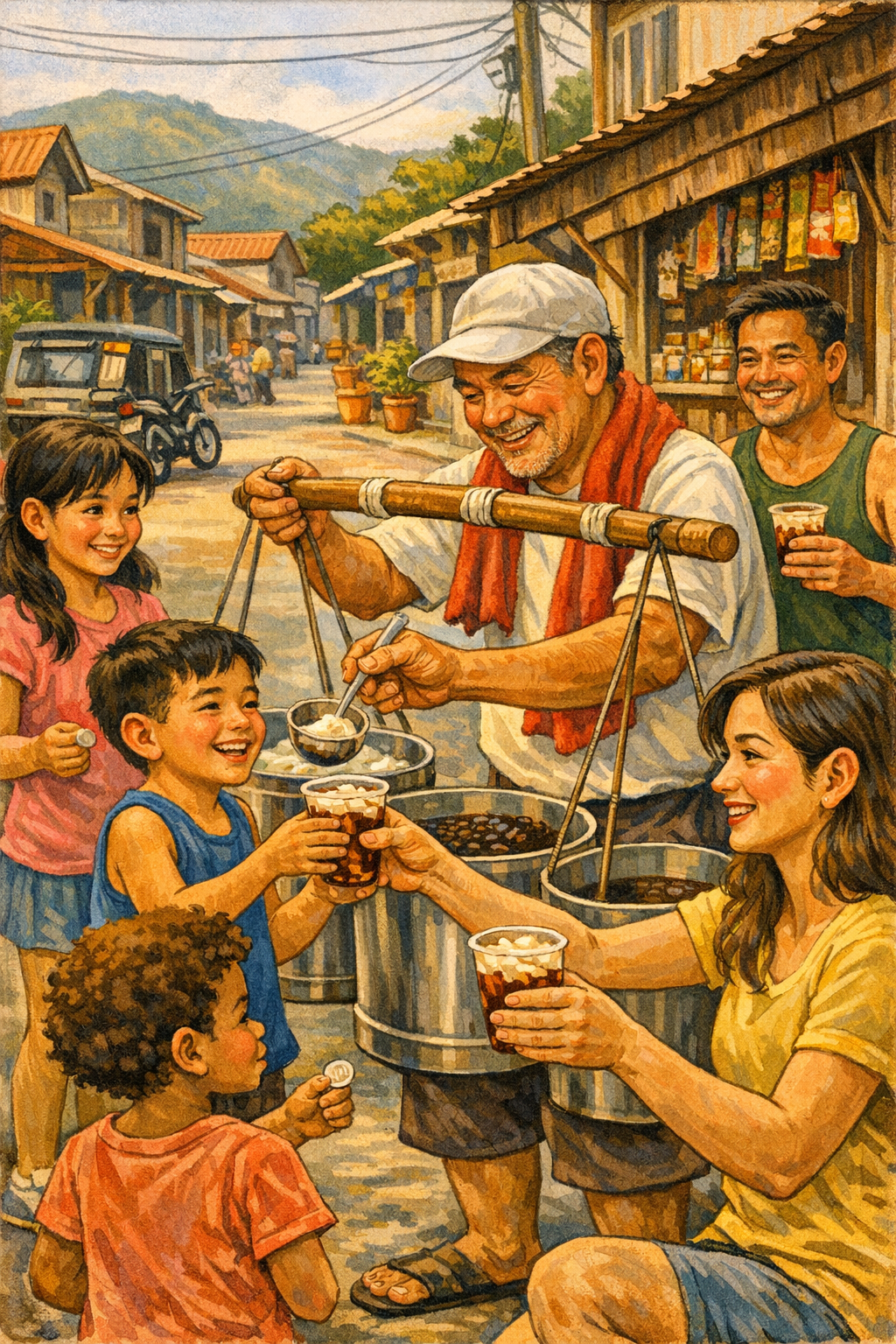
    If you walk through a Filipino neighborhood early in the morning, you will hear a familiar call echoing through the streets: “Tahooooo!” It is the sound of a magtataho — a traditional vendor — carrying two stainless pails on a wooden yoke across his shoulders. Inside those pails is one of the most beloved comfort foods in the Philippines: taho.

    For many Filipinos, taho is more than a snack. It is a symbol of childhood, community, and the simple joys of everyday life. For our ministry among Filipinos and Aetas, it is also a reminder of how God meets people in ordinary places — in streets, homes, and shared moments of kindness.


    What Exactly Is Taho?

    Taho is a warm, sweet, soft drink made from three simple ingredients:

    • Silken tofu
      – soft, warm, and freshly scooped
    • Arnibal
      – a syrup made from brown sugar and sometimes vanilla
    • Sago pearls
      – small, chewy starch balls similar to tapioca

    The vendor mixes these ingredients right in front of you, creating a comforting cup that is both nourishing and nostalgic.


    A Tradition That Goes Back Generations

    Taho has deep roots in Filipino culture. Its origins trace back to Chinese influence, especially the tradition of warm soy pudding. Over time, Filipinos made it their own — adding brown sugar syrup, sago pearls, and the unique way of selling it.

    The Magtataho: A Cultural Icon

    The magtataho is instantly recognizable:

    • A wooden yoke balanced across the shoulders
    • Two stainless steel pails — one for tofu, one for syrup and sago
    • A loud, friendly call that wakes up the neighborhood

    Children run out of their homes with coins in hand. Parents buy cups for their kids. Workers grab a quick breakfast before heading to their jobs. In many communities, the taho vendor is a daily visitor — almost like a neighbor.

    This simple ritual shows something beautiful about Filipino life: community happens in small, shared moments.


    Taho in Filipino Daily Life

    Taho is usually sold in the early morning, when the air is cool and the streets are quiet. It is part of the rhythm of Filipino mornings — like the smell of rice cooking or the sound of roosters crowing.

    For many Filipinos living abroad, taho is one of the foods they miss the most. It reminds them of home, family, and childhood.

    For Aeta communities, taho vendors are also a familiar sight in towns and markets. The drink is affordable, filling, and easy to enjoy — a small treat that brings joy to children and adults alike.


    Nutritional Value: Simple but Nourishing

    Taho is not just comforting — it also has real nutritional benefits.

    1. Silken Tofu (the main ingredient)

    • Good source of plant protein
    • Contains calcium, iron, and potassium
    • Gentle on the stomach
    • Heart‑friendly soy isoflavones

    2. Arnibal (brown sugar syrup)

    • Provides quick energy
    • Can be reduced for those watching sugar intake

    3. Sago Pearls

    • Adds carbohydrates for energy
    • Light and easy to digest

    Compared to many street foods, taho is actually one of the healthier Filipino snacks — warm, soft, and nourishing.


    Why Taho Matters for Our Ministry

    When we serve in Filipino and Aeta communities, we are not only sharing the Gospel — we are entering into the daily life of the people. Understanding simple traditions like taho helps us:

    • Build relationships
    • Appreciate local culture
    • Connect with families in familiar ways
    • Show respect for the rhythms of Filipino life

    Jesus often met people in ordinary places — at wells, in homes, on the road. In the same way, ministry in the Philippines often begins with simple conversations, shared food, and everyday kindness.

    Sometimes, a cup of taho opens the door to a deeper friendship.


    A Taste of the Philippines for American Readers

    If you have never tried taho, imagine:

    • The warmth of fresh tofu
    • The sweetness of brown sugar
    • The soft chew of sago
    • The joy of hearing a vendor call out in the morning

    It is a small picture of Filipino hospitality — simple, warm, and full of heart.

    And for us, it is also a reminder that God is present in the ordinary moments of life. He works through shared food, shared stories, and shared community.


    Closing Reflection

    Taho may be a humble street drink, but it carries the story of a people — their mornings, their memories, their neighborhoods, and their way of life. As we continue our Christian work among Filipinos and Aetas, we celebrate these traditions because they help us understand the hearts of the people we serve.

    Sometimes, ministry begins with something as simple as a warm cup of taho.


    Filipino Street Vendor
    Tahoooooooo!
  • María Orosa: The Chemist Who Fed a Nation in Crisis

    María Orosa: The Chemist Who Fed a Nation in Crisis

    History often remembers the generals and politicians of wartime, but some of the most profound acts of courage come from those who simply do the work in front of them. During World War II in the Philippines, one of the most vital figures of the resistance was not a soldier, but a food chemist named María Orosa.

    María Orosa The Chemist Who Fed a Nation in Crisis

    Brilliance Over Prejudice

    Born in 1892 in Taal, Batangas, Orosa possessed a brilliant scientific mind. She traveled to the United States in 1916 as a government scholar to study at the University of Washington. During the 1910s and 1920s, the American academic and professional landscape was deeply challenging for women, and even more so for a woman of color. The field of chemistry was heavily dominated by men, and a Filipina immigrant faced systemic barriers at every turn.

    Yet, Orosa’s talent was undeniable. She earned degrees in pharmaceutical chemistry and food chemistry, and her expertise became so highly regarded that the Washington state government offered her a position as an assistant chemist. In an era of intense prejudice, she secured a lucrative, prestigious job that many would have envied.

    What makes her story extraordinary is that she walked away from it. She did not return to the Philippines because she was overlooked in America; she returned because she rejected the comfort and status of that success. She deliberately chose to bring her skills back to a less-equipped laboratory in Manila because she believed her knowledge belonged to her country.

    A Focus on Self-Reliance

    In the 1920s and 30s, the Philippines was heavily dependent on imported canned goods, despite its abundant agricultural resources. Orosa set to work changing this. As the head of the plant utilization division at the Bureau of Plant Industry, she developed over 700 recipes, preservation methods, and canning techniques using native ingredients.

    She is perhaps most widely known today for inventing banana ketchup—a clever, locally sourced alternative to tomato ketchup. But her most significant contributions were born out of a desire to eradicate malnutrition. She created two vital nutritional supplements:

    • Soyalac: A highly nutritious, protein-rich liquid preparation made from soybeans.
    • Darak: A vitamin-rich cookie made from rice bran (the outer coating of the rice grain usually discarded during milling). Darak was packed with Vitamin B1 and was specifically designed to prevent and cure beriberi, a deadly disease caused by thiamine deficiency.

    The War Years

    When the Japanese invaded the Philippines in 1941, Orosa’s scientific work took on a new, life-saving urgency. Rather than fleeing or keeping her head down, she joined Marking’s Guerrillas, a local resistance group, holding the rank of captain.

    Her weapon was her laboratory. As the occupation dragged on and food supplies dwindled, thousands of Filipino and American prisoners of war were held in camps like the one at the University of Santo Tomas. Starvation and disease were rampant. Working under the radar of the occupying forces, Orosa organized a system to smuggle her Darak cookies and Soyalac into the internment camps. Hidden inside hollowed-out bamboo tubes, these “miracle foods” were covertly passed to prisoners.

    Survivors of the camps later testified that Orosa’s smuggled nutrients were the only thing that kept thousands of people from dying of starvation and beriberi.

    A Tragic End, A Lasting Legacy

    In February 1945, the Battle of Manila began as American and Filipino forces fought to retake the city from the Japanese. The fighting was brutal, and the city was subjected to devastating artillery fire.

    Friends and family pleaded with Orosa to evacuate the Malate district where she lived and worked. She refused. She felt a deep responsibility to her staff and her country, reportedly telling her loved ones, “I cannot abandon my work.”

    On February 13, 1945, while at work in the Bureau of Plant Industry, Orosa was hit by shrapnel from an American artillery shell. She was taken to the nearby Malate Remedios Hospital, a makeshift facility serving the wounded. In a tragic turn of events, the hospital itself was struck by a second bombing raid later that same day. Orosa was killed instantly at the age of 51.

    María Orosa’s life was defined by practical service. She did not seek the spotlight, but simply used the tools and knowledge she had to address the immediate needs of her fellow citizens. In a time of profound darkness, she used her work to keep thousands alive, demonstrating that true heroism often looks like steady, quiet dedication to the welfare of others.