“The LORD sits enthroned over the flood; the LORD is enthroned as King forever. The LORD gives strength to his people; the LORD blesses his people with peace.” —Psalm 29:10–11 (NIV)
The shift starts in June. The perpetually sunny skies begin to dull, and occasional afternoon showers roll in. By definition, a monsoon is a seasonal change in the direction of the prevailing winds. During this time of year, the prevailing wind shifts to the southwest, pulling massive amounts of moisture off the ocean—a weather pattern known locally as the Habagat. By July and August, the skies are completely overcast, and we are locked into periods of heavy, relentless rain.
Occasionally, the atmosphere clears and becomes unexpectedly balmy. But that refreshing change is just a tease and a warning: heavy rain squalls are right behind it. When a squall hits, it literally roars through the neighborhood, hammering everything with wind-driven raindrops that feel like tiny missiles. The sound overrides everything else in the house.
The Daily Damp and Dangerous Waters
Most homes in the Philippines are not insulated, and there is no central heating. Unless you make a trip to a commercial laundry, there are no clothes dryers. At the height of the Habagat, the humidity is so high that wet clothes will not dry, and dry clothes become damp just hanging in the closet. Walls and floors grow slimy, and mold turns surfaces as slippery as winter ice. For the many families who sleep on mats on the floor, it means resting on cold, wet cement every night.
The nonstop rain brings severe hazards. Over the past few months, the saturated mountains gave way, triggering localized landslides that crushed retaining walls and threatened upland homes. Down in the city, rivers overflowed their banks, forcing over a thousand Olongapo City residents to flee to evacuation centers.
Floodwaters never entered our home, but we were physically cut off on two separate occasions. On one of those occasions, while returning from picking up important medical tests for Nancy, we were nearly caught in a flash flood. We had to turn the car around on a traffic-clogged street as the fast-moving waters rose rapidly, eventually taking shelter at the local SM Central Mall for an hour until it was safe to navigate home.
Even inside, the dangers persisted. Rainwater found its way into an electrical outlet in our “dirty kitchen,” an open-air room used for cooking with gas burners or charcoal or wood fire. The water-filled outlet caused electric arcs to pop and shoot across the room at 12:30 in the morning. The result: a terrifying indoor fireworks display. The room filled with smoke, an acrid smell, bright flashes, and a cracking noise as loud as a high-caliber rifle shot. The only reason our house did not catch fire is that absolutely everything around was simply too wet to burn.
The Economic Toll and the “Stoop Work” of Recovery
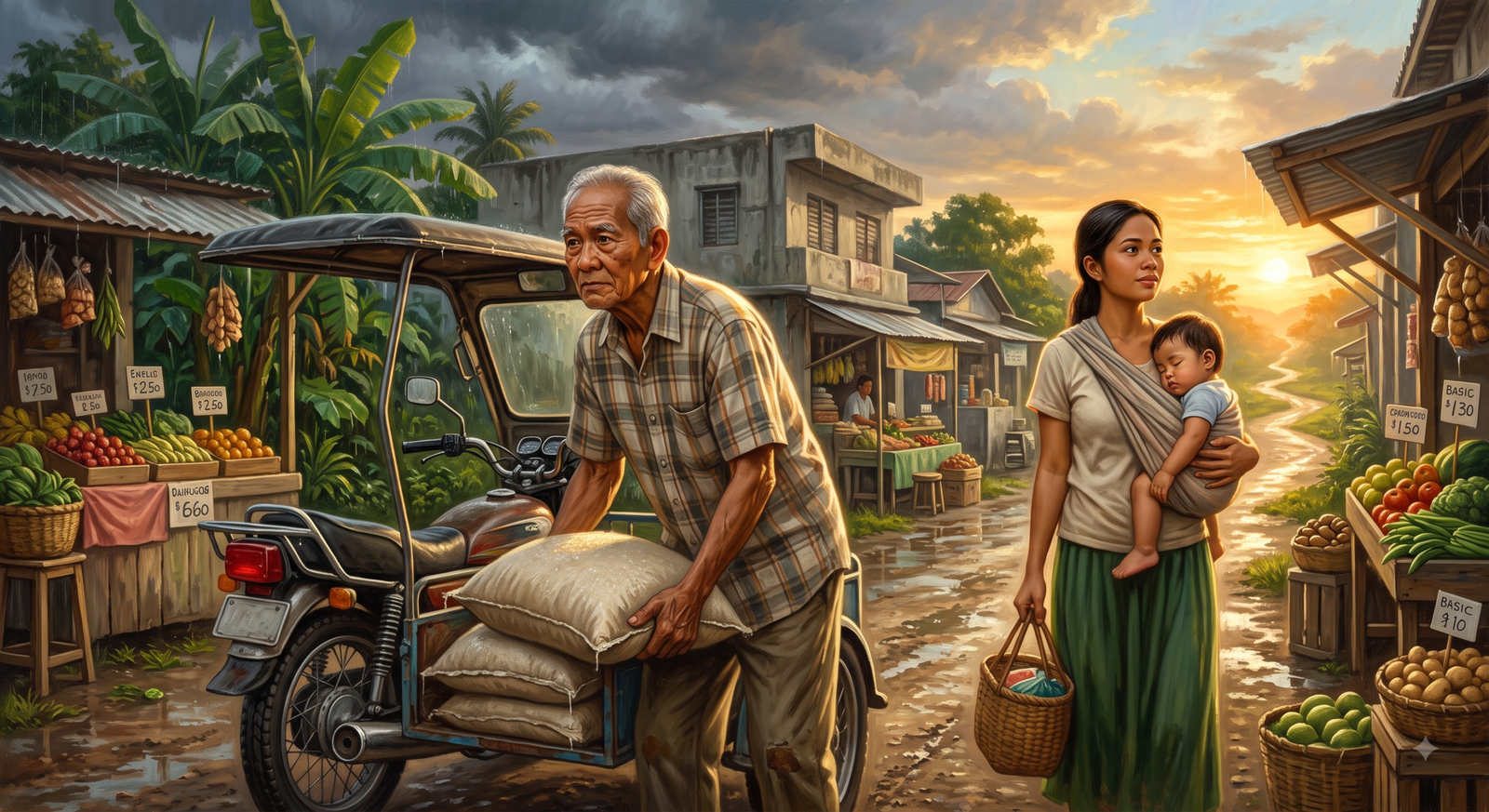
When the weather turns like this, it isn’t just an inconvenience; it is an immediate economic crisis. A week of rain means a week without wages for tricycle drivers, construction workers, and market vendors.
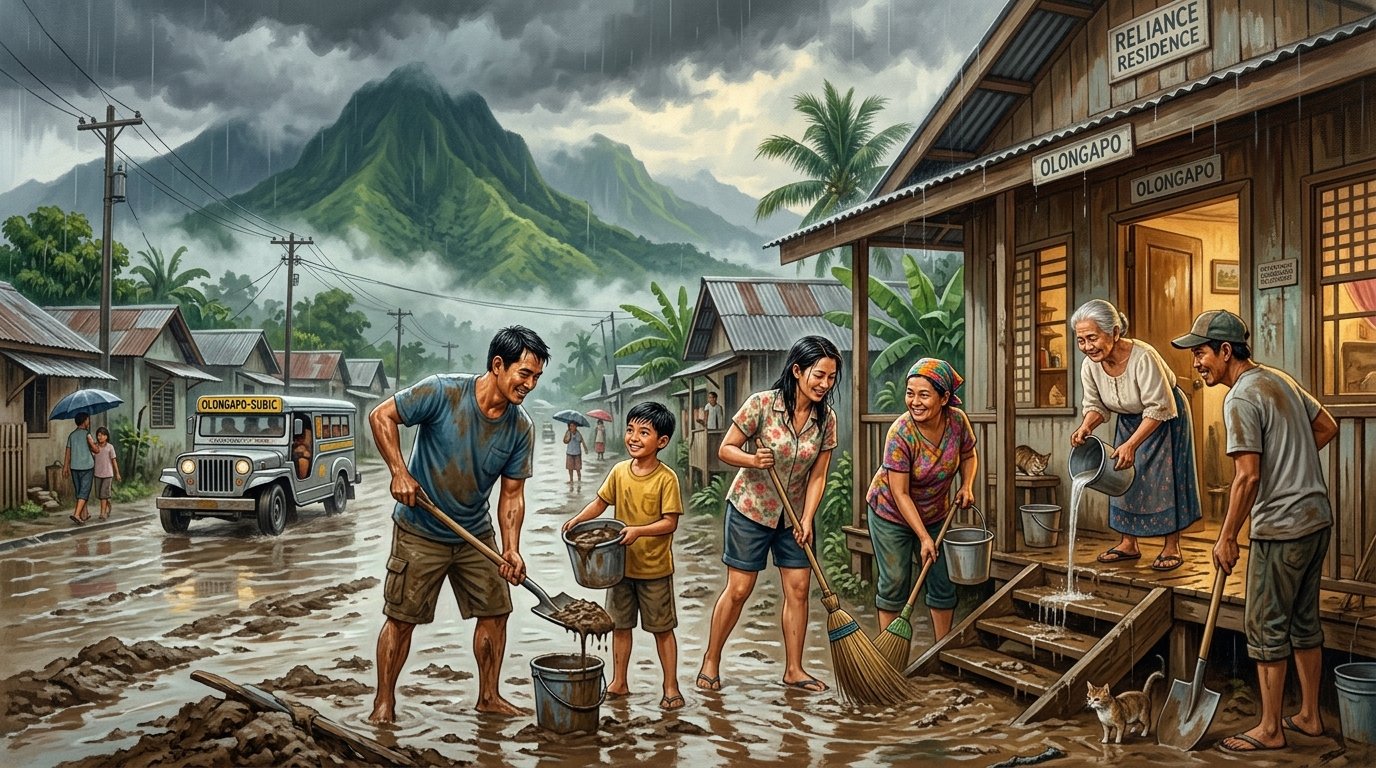
Furthermore, when the floods finally recede, they leave behind a secondary, silent threat. Flooded homes and streets are coated in a thick, sticky mud contaminated with human waste and rat feces and urine, creating a severe risk for leptospirosis.
People—young, old, and everyone in between—have to scrape and scrub to remove the slime from their homes, streets, and neighborhoods. It is hard, heavy, backbreaking, exhausting toil. When it’s finished, you can’t go home and put on clean, dry clothes. Everything is wet and soiled.
Our friend Walter, who works for our landlord, has his family home in Bulacan, north of Manila. His home was flooded for three weeks, and his family lived in it the entire time. The ground floor had water up to the bottom of the chair seats. They still sat around the dinner table for meals and traveled two kilometers by bangka (a native canoe) to reach dry land. The water has finally receded, but it left behind a thick layer of mud and debris, and a great deal of damage that the family is now working to clean up and repair.
No matter how much rain falls, you cannot dampen the Filipino spirit. We have seen it time and time again: Filipinos are resilient overcomers. As October draws to a close, the Habagat is finally giving way to the cooler, drier northeast winds of the Amihan—but the cleanup and recovery will continue long after the rain stops.
“Not only so, but we also glory in our sufferings, because we know that suffering produces perseverance; perseverance, character; and character, hope.” —Romans 5:3–4 (NIV)