Tag: Olongapo City

  • Pressing On Through the Monsoon: The Realities of the Habagat

    Pressing On Through the Monsoon: The Realities of the Habagat

    It can be hard to picture exactly what a prolonged monsoon season looks and feels like here on the western side of Central Luzon.

    The shift starts in June. The perpetually sunny skies begin to dull, and occasional afternoon showers roll in. By definition, a monsoon is a seasonal change in the direction of the prevailing winds. During this time of year, the wind turns southwest, pulling massive amounts of moisture off the ocean—a weather pattern known locally as the Habagat. By July and August, the skies are completely overcast, and we are locked into periods of heavy, relentless rain.

    Occasionally, the atmosphere clears and becomes unexpectedly balmy. But that refreshing change is just a tease and a warning: heavy rain squalls are right behind it. When a squall hits, it literally roars through the neighborhood, hammering everything with wind-driven raindrops that feel like tiny missiles. The sound overrides everything else in the house.

    The Daily Damp and Dangerous Waters

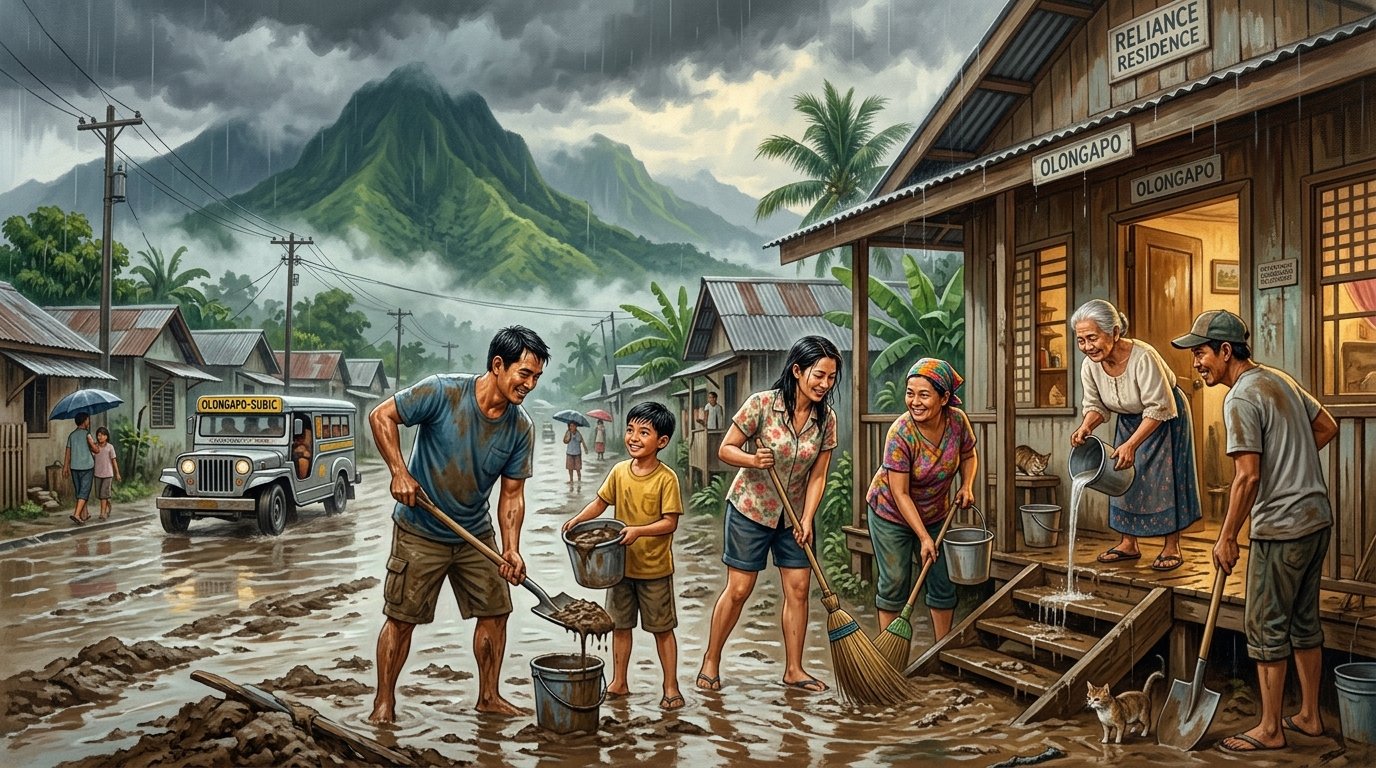
    Most homes in the Philippines are not insulated, and there is no central heating. Unless you make a trip to a commercial laundry, there are no clothes dryers. Right now, the humidity is so high that wet clothes will not dry, and dry clothes become damp just hanging in the closet. Walls and floors grow slimy, and mold turns surfaces as slippery as winter ice. For the many families who sleep on mats on the floor, it means resting on cold, wet cement every night.

    The nonstop rain brings severe hazards. In just the past couple of weeks, the saturated mountains have given way, triggering localized landslides that have crushed retaining walls and threatened upland homes. Down in the city, rivers have breached their spilling marks, forcing over a thousand Olongapo City residents to flee to evacuation centers.

    Floodwaters have not entered our home, but we have been physically cut off on two separate occasions. Recently, while returning from picking up important medical tests for Nancy, we were nearly caught in a flash flood. We had to turn the car around on a traffic-clogged street as the fast-moving waters rose rapidly, eventually taking shelter at the local SM Central Mall for an hour until it was safe to navigate home.

    Even inside, the dangers persist. Rainwater found its way into an electrical outlet in our “Dirty Kitchen”, a room in the house without a roof used for cooking with gas burners or charcoal or wood fire. The water-filled outlet caused electric arcs to pop and shoot across the room at 12:30 in the morning. The result: a terrifying indoor fireworks display. The room filled with smoke, an acrid smell, bright flashes, and a cracking noise as loud as a high-caliber rifle. The only reason our house did not catch fire is that absolutely everything around was simply too wet to burn.

    The Economic Toll and the “Stoop-Work” of Recovery

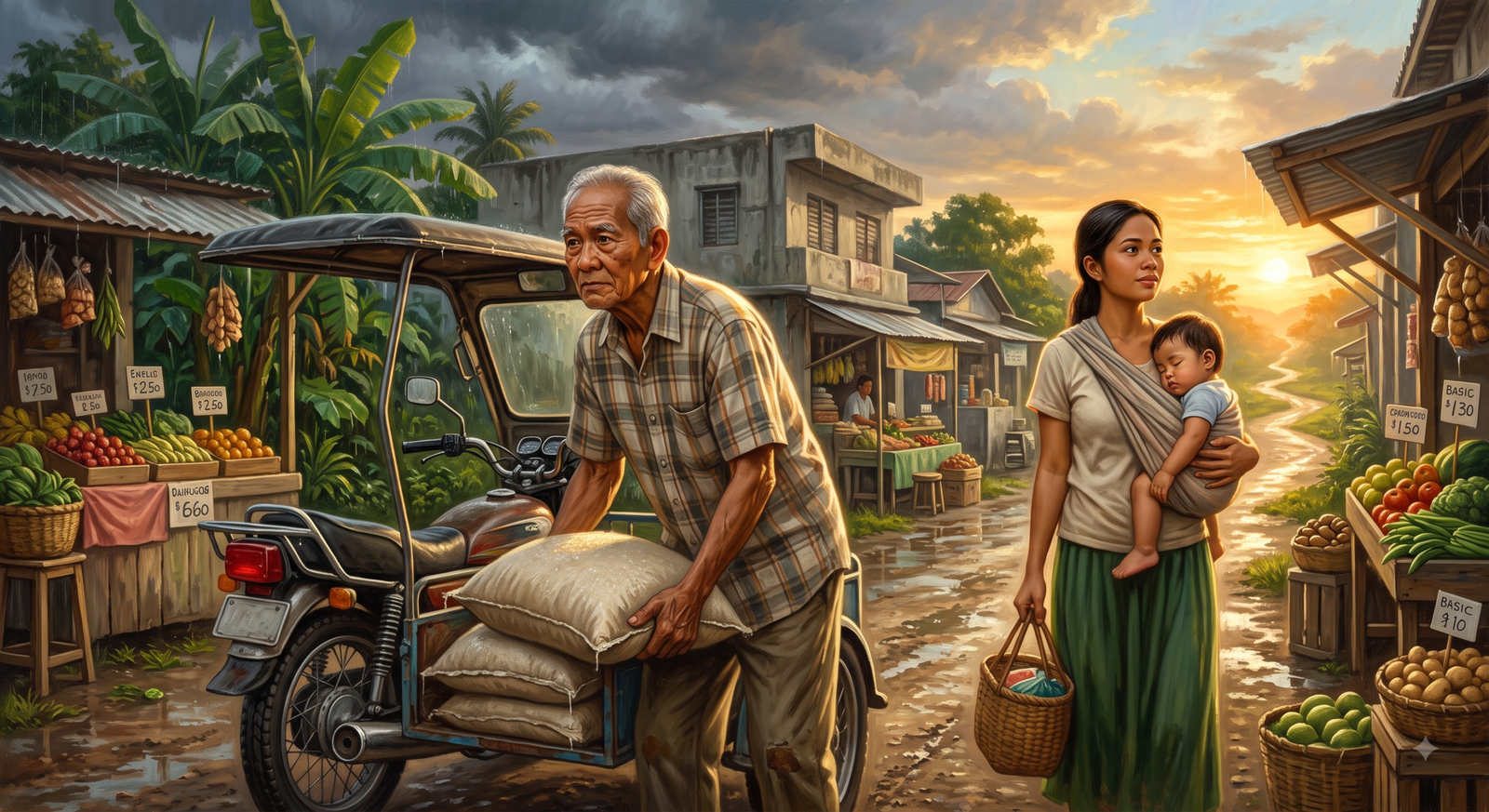
    When the weather turns like this, it isn’t just an inconvenience; it is an immediate economic crisis. A week of rain means a week without wages for tricycle drivers, construction workers, and market vendors.

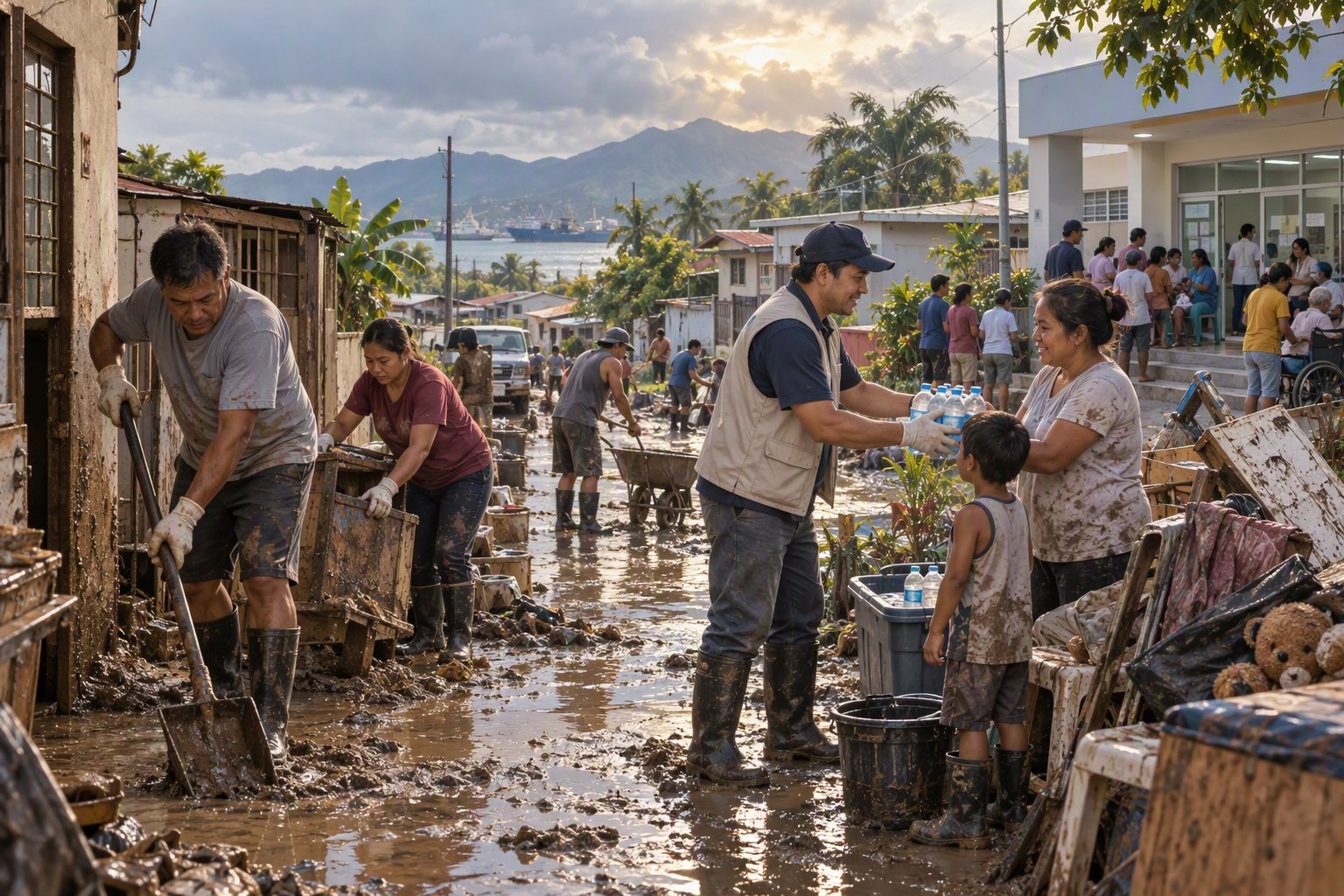
    Furthermore, when the flash floods finally recede, they leave behind a secondary, silent threat. Flooded homes and streets are coated in a thick, sticky mud contaminated with human bodily waste, as well as rat feces and urine, creating a severe risk for leptospirosis.

    People, young and old and in between, have to scrape and scrub to remove the slime from their homes, streets, and neighborhoods. It is hard, heavy, backbreaking, exhausting toil. When it’s finished, you can’t go home and put on clean, dry clothes. Everything is wet and soiled.

    Our friend Walter, who works for our landlord, has his family home in Bulacan, north of Manila. His home has been flooded for three weeks. His family still lives in it. The ground floor has water up to the bottom of the chair seats. They still sit around the dinner table for meals. They travel two kilometers by Banka (native canoe) to dry land.

    No matter how much rain falls, you cannot dampen the Filipino spirit. We have seen it time and time again; Filipinos are resilient overcomers.

    How You Can Pray:

    • Pray for the physical safety and health of those in crowded Olongapo City evacuation centers, specifically for protection against leptospirosis.
    • Pray for a break in the rain so the saturated hillsides can stabilize and the final cleanup can begin.
    • Pray for endurance for us and our neighbors as we continue the slow and steady work of recovery.
  •  The Answer to Every Question

     The Answer to Every Question

    — The Answer to Every Question

    “My goal is that they may be encouraged in heart and united in love, so that they may have the full riches of complete understanding, in order that they may know the mystery of God, namely, Christ, in whom are hidden all the treasures of wisdom and knowledge.” Colossians 2:2-3 NIV

    Vacation Bible School at the Olongapo City Christian School (OCCS) was one of the main highlights of summer vacation for our three OCCS scholarship students, Caleb, Kaella, and Kelsey. Kelsey is a new addition to our Scholarship Outreach and a newcomer to the first-grade class at Olongapo City Christian School.


    During VBS season each year, I’m reminded of a boy named Billy from a VBS class that I assisted many years ago.
    Every time the teacher asked the class a question, Billy was the first to raise his hand. His classmates chuckled among themselves, knowing that Billy’s answer would be the same each time. To every question, Billy’s answer was “God”.
    Eight-year-old Billy may have been a bit slow in his understanding of some things, but at the same time, he also knew a lot more than many others do.


    God IS the ANSWER to any and every Question in life.

    Olongapo City Christian School (OCCS) 2026 Vacation Bible School (VBS)

    Kaella, Caleb, and Kelsey at Olongapo City Christian School Vacation Bible School 2026

  • Pressing On Amidst Economic Storms

    Pressing On Amidst Economic Storms

    As we prepare the latest updates for the Newsletter Bits & Pieces file, we want to share the reality of the economic situation currently impacting the communities we serve. Our ministry is built on the belief that “slow, steady faithfulness wins the race,” and running that race requires us to navigate some very real, difficult hurdles.

    Here is a brief look at the current economic landscape in the Philippines right now:

    • A Historic Growth Slump: The Philippines’ GDP growth dropped to 2.3 percent in the second quarter of this year. Excluding the COVID-19 pandemic, this marks the slowest the country has grown since 2009—falling well below the 5.3 percent growth that the World Bank predicted for 2026.
    • Ongoing Economic Weakening: The government has tried to brush off the slowdown as “temporary.” However, after a period of strong growth, the fact is that the Philippine economy has seen sharp and continuous weakening since the third quarter of 2025.
    • Infrastructure & Corruption Fallout: One major factor at play is the flood control corruption scandal that broke last year. Increased scrutiny around infrastructure spending has unfortunately slowed investment by both the government and the private sector alike. (The government notes this is being dealt with and expects infrastructure spending to increase in the third quarter).
    • Global Energy Disruptions: The second major factor is the massive disruption to global energy markets following U.S. attacks on Iran and Iran’s closure of the Strait of Hormuz. Because the Philippines relies heavily on oil imported from the Middle East, the country is facing a nasty spike in inflation and a sharp slowdown in consumer spending.
    • Regional Comparisons: These figures make the Philippines one of the worst—possibly the worst—performing economies in the region right now. For contrast, neighbors like Indonesia, Malaysia, Singapore, and Vietnam have all released figures showing second-quarter growth above 5 percent.

    The Call to “Stoop-Work”

    What do these numbers mean for the people of Olongapo? It means that the daily hardships for our neighbors, our scholars, and the families we serve are actively intensifying. High inflation and economic slumps always hit those at the bottom the hardest.

    Yet, this is exactly where the hard, heavy, and slow work of the Christian in this world takes place. Our response is not found in politics or loud noise, nor is it about reaching for the “heights”—it is about bending the back to do the “stoop-work” of service. As the economic burdens on our community grow heavier, we simply lower ourselves to serve them with quiet generosity and faithfulness.

    Thank you for standing with our Filipino neighbors and us as we continue to press on.

  • The Alchemy of Scrap: Navigating the E-Waste Trade in Subic Bay

    The Alchemy of Scrap: Navigating the E-Waste Trade in Subic Bay

    Subic Bay has always been defined by what moves through its deepwater port. It is an economic engine for Olongapo, Zambales, and the broader Central Luzon region, bringing in jobs, infrastructure, and international trade. But over the last year, a different kind of cargo has been quietly stacking up at the container terminals: the discarded remnants of American digital life.

    Between March 2025 and June 2026, environmental watchdogs tracked 234 containers of suspected electronic waste—old servers, circuit boards, and wiring—originating from the United States and arriving at the Subic Bay Freeport.

    The situation highlights a complicated global reality. What one nation classifies as a toxic liability, another sees as a lucrative commodity. At the center of this exchange are the people living and working around the bay, caught between the immediate need for a paycheck and the long-term stewardship of their home.

    The Economics of Shifting the Burden

    To understand why a broken computer travels thousands of miles across the Pacific, you have to look at the math.

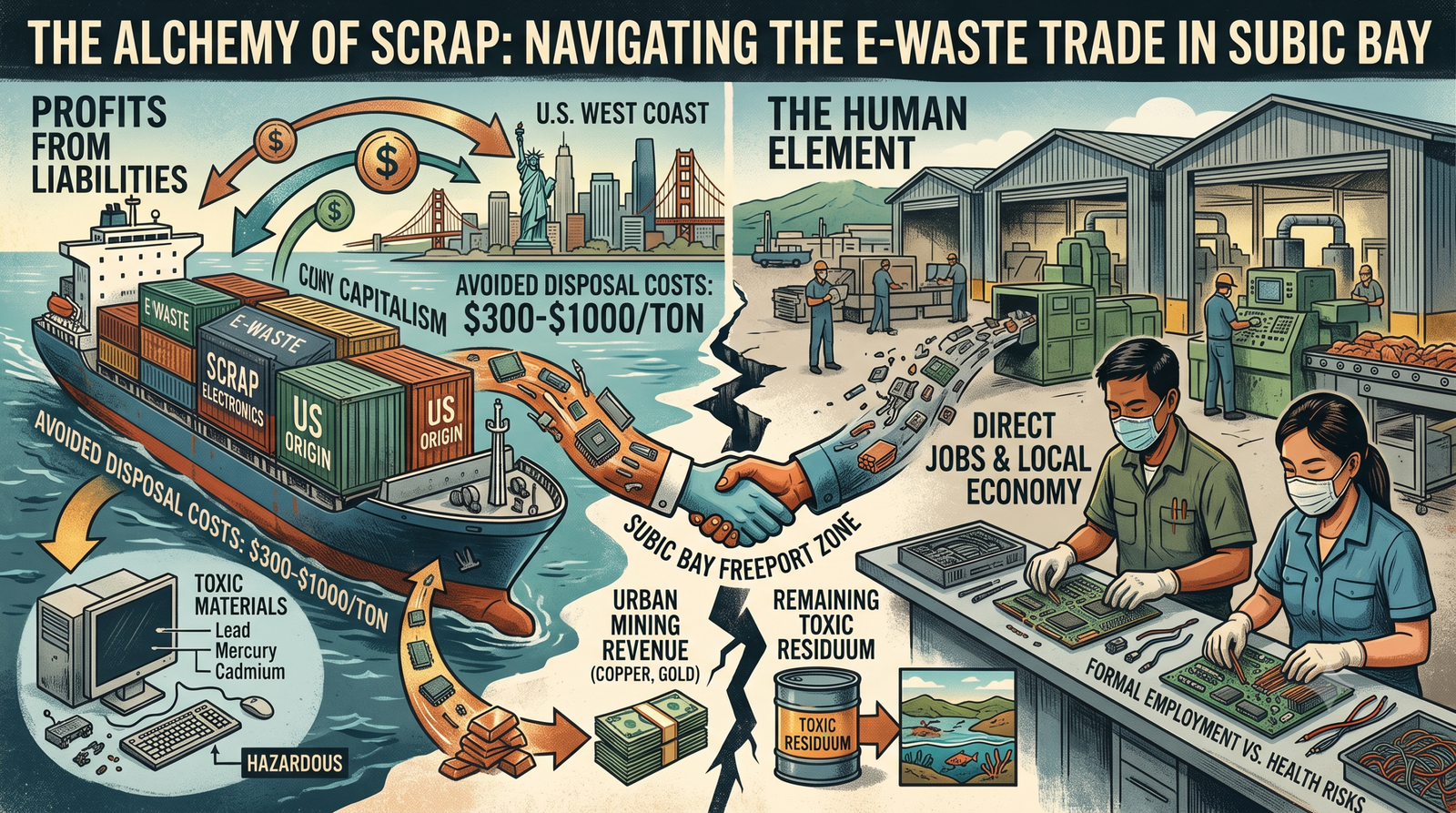
    In the United States, safely recycling hazardous e-waste under strict environmental regulations is expensive, costing anywhere from $300 to over $1,000 per ton. For a waste generator, that is a heavy liability on the balance sheet.

    However, if that same waste is boxed up and exported to a scrap broker overseas, the liability suddenly becomes a profit. Exporters can sell unsorted e-waste for $50 to $200 a ton. They clear their warehouses, make a modest return, and pass the environmental burden downstream.

    The United States is one of the few industrialized nations that has not ratified the Basel Convention, an international treaty designed to stop developed countries from dumping hazardous waste into developing ones. Because the U.S. is not bound by the treaty, the export of these materials exists in a regulatory gray area, exploiting legal loopholes to reach shores like ours.

    “Urban Mining” vs. Toxic Dumping

    Inside the Subic Bay Freeport, local recycling locators have defended the imports as a vital part of the circular economy. They call it “urban mining.”

    And in a strictly economic sense, they aren’t wrong. A single ton of high-grade electronic circuit boards yields significantly more gold and copper than a ton of raw mined ore. Operating with tax exemptions inside the Freeport, and utilizing a local labor force that is far less expensive than automated American plants, these facilities manually dismantle the scrap. The valuable metals are extracted and sold to global smelters, generating revenue and creating formal employment for residents of Olongapo and nearby towns.

    For the man on the street—a father trying to put rice on the table or pay for his children’s schooling—a job at a sorting facility is a lifeline. It provides a steady income in a region where formal employment can sometimes be scarce.

    But this economic opportunity comes with a quiet, lingering cost. Electronic waste is laced with lead, mercury, cadmium, and flame retardants. While the valuable gold and copper are exported back out, the toxic, non-recyclable residuals—chemical sludges and contaminated plastics—remain behind. If a facility cuts corners on safety protocols or ventilation, the workers bear the physical cost through respiratory issues and heavy metal exposure. Furthermore, the risk of chemical runoff poses a direct threat to the marine ecology of Subic Bay, which local communities rely on for both fishing and tourism.

    Jam Lorenzo, deputy executive director of BAN Toxics, summarized the fundamental tension during recent protests: “The unimpeded entry of e-waste into Subic infringes upon our country’s regulatory authority over our territory. Such activities run contrary to the state policy of safeguarding the sovereignty, territorial integrity, and environmental protection embodied in our Constitution.”

    A Line in the Sand

    The tension between these two realities recently came to a head.

    On July 22, 2026, the Bureau of Customs (BOC) at the Port of Subic took decisive action. Acting on intelligence regarding the MV Tokyo Express, authorities flagged three incoming containers declared as “scrap copper” from the U.S. Instead of allowing them to be offloaded, the BOC issued a “Retain on Board” order, citing the Philippines’ obligations under the Basel Convention. The ship departed a day later, taking the cargo with it.

    Following this incident, the Subic Bay Metropolitan Authority (SBMA) clarified its stance. Armie Llamas, head of the SBMA Communications Department, stated, “The SBMA, in collaboration with the Bureau of Customs Port of Subic Bay, has denied the entry of suspected e-waste shipments originating from the US, a country that is not a party to the Basel Convention.” She added that as a signatory, the Philippines, through the SBMA, is committed to upholding the treaty’s provisions.

    It was a significant victory for local environmental groups, including the EcoWaste Coalition and BAN Toxics, who have been sounding the alarm for months. Yet, the watchdogs have already flagged an additional 184 containers of suspected e-waste currently in transit, expected to arrive between August and September.

    The inter-agency meetings now taking place between the BOC, the SBMA, and the Department of Environment and Natural Resources (DENR) will determine the future of this trade in our region.

    Weighing the True Cost

    The business of imported e-waste asks a fundamental question about how we value our resources and our people. There is undeniable ingenuity in recovering precious metals from discarded technology, and the jobs provided by these facilities matter deeply to the families who rely on them.

    However, a truly fair economy does not require a community to trade its long-term health and the safety of its environment for short-term wages. Real prosperity involves honest accounting. As long as it remains cheaper for developed nations to ship their hazardous liabilities overseas rather than process them responsibly at home, the pressure on ports like Subic Bay will continue.

    Finding a balanced path forward means ensuring that the pursuit of profit does not leave the heaviest burdens on the shoulders of those least equipped to carry them.

    Editor’s Note: This article was prepared and structured with the assistance of artificial intelligence. All facts, quotes, and regional details have been directed, reviewed, and verified by the author to ensure accuracy, fairness, and alignment with verifiable events.